Packaging Guide
The best mylar packaging for food such as coffee consists of a PET or Kraft paper outer layer, an aluminum foil middle layer, an LLDPE inner layer, and a degassing valve for freshness. This XWPak guideline will help you choose the best mylar bag for your specific food product. From a 20g beauty sample to a 2kg coffee bag, every product needs a different size, material stack, and print finish. We walk you through all of it.
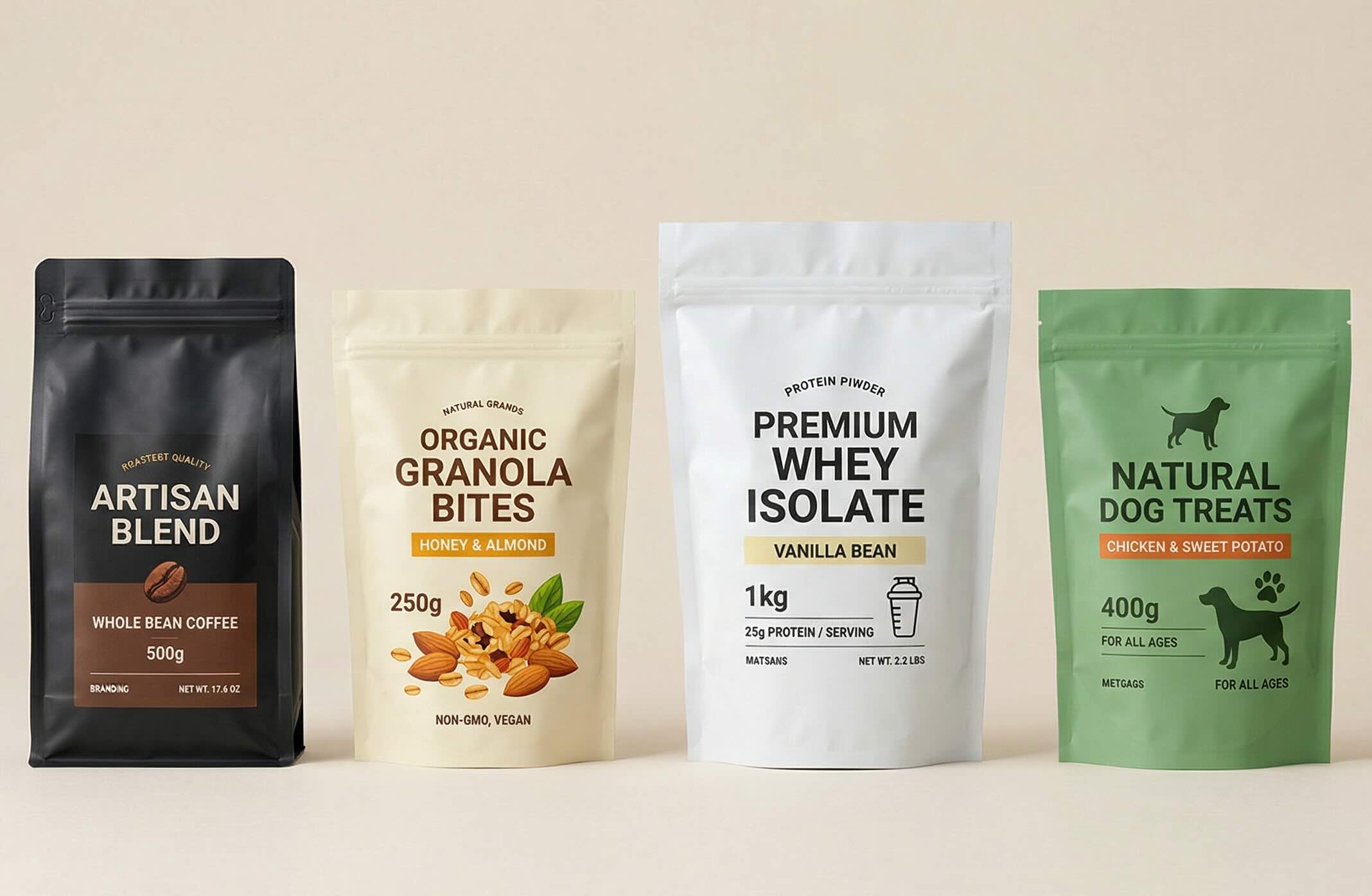
The term "mylar" originally referred to a type of polyester film. Over time it became the everyday name people use for high-barrier flexible pouches, especially the ones that keep food fresh for months or even years. These bags block oxygen, moisture, light, and odors, which are the four main reasons food goes bad fast.
Not every mylar bag for food storage is the same though. A bag made for coffee has completely different needs than one made for protein powder or pet treats. The size, the layers of material, and even the print finish all change depending on what you are packing. That is exactly what this guide covers, product by product, step by step.
Choosing the wrong size is one of the most common mistakes. Too small and the product does not fit or seal properly. Too large and you waste material, and the bag looks cheap on the shelf. Below are the recommended sizes for each product category, based on actual weight ranges.
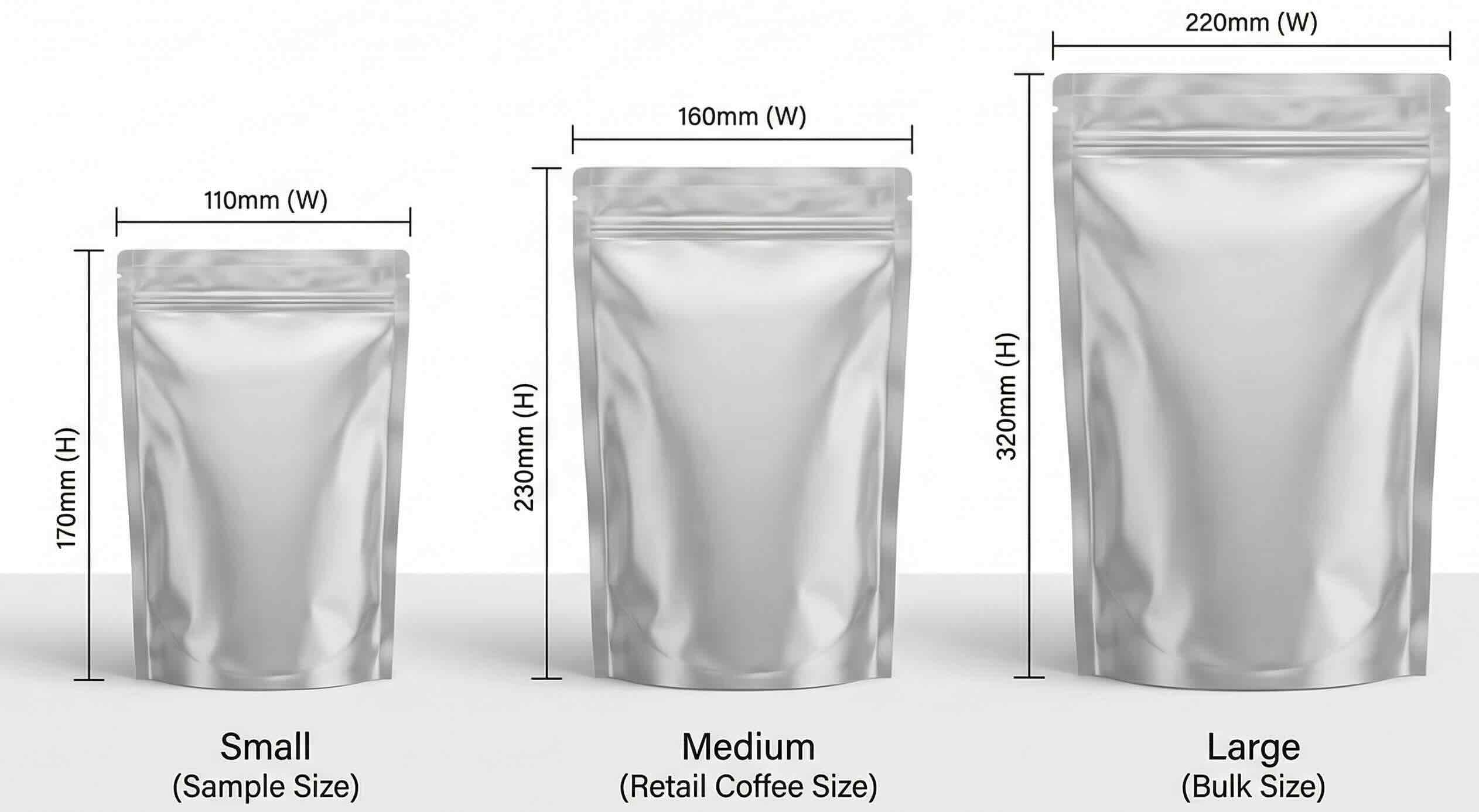
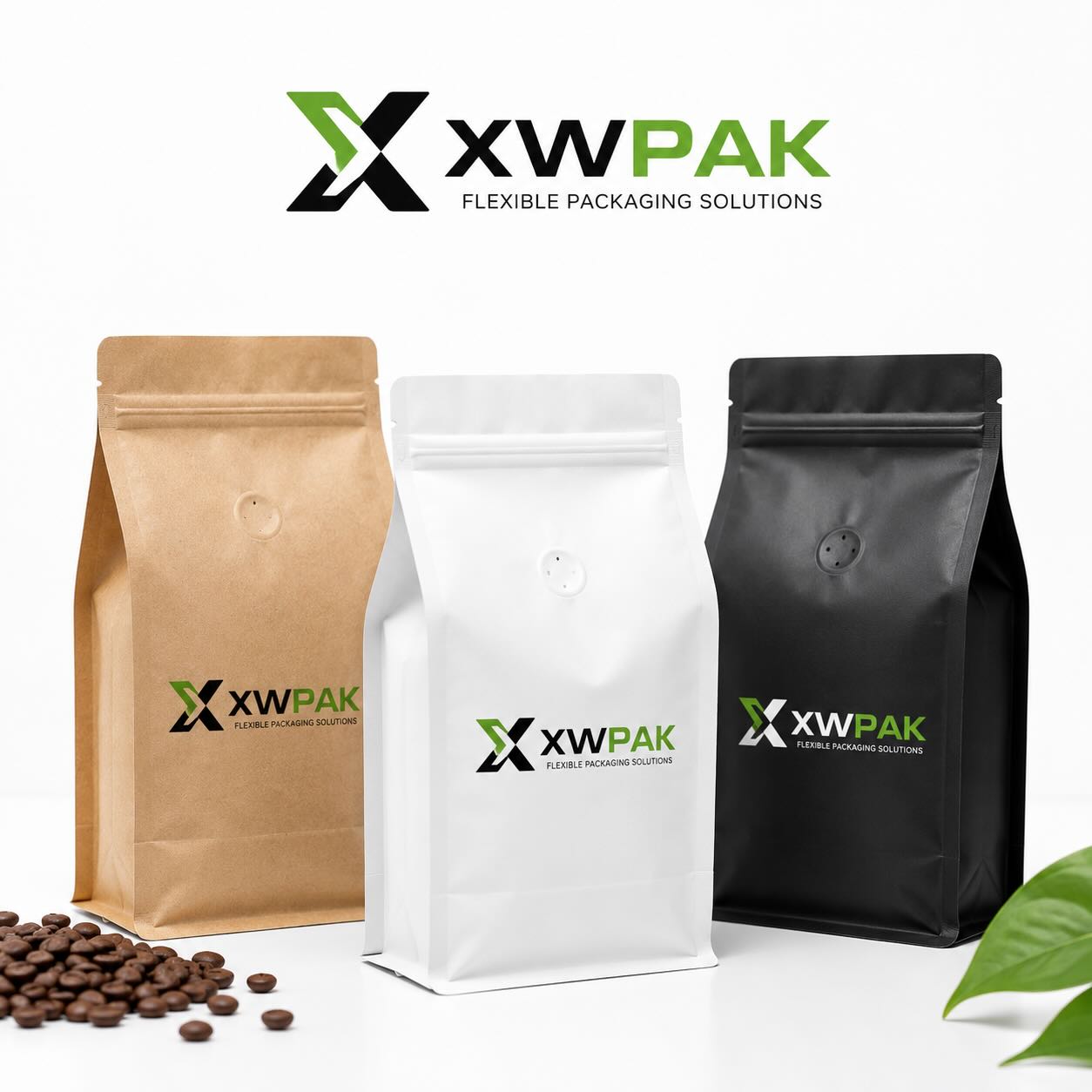
Coffee bags need to hold the product comfortably while leaving room for a degassing valve and a zipper closure. Freshly roasted coffee releases CO₂, so the bag needs space to breathe without bursting.
| Weight | Dimensions (mm) | Best For |
|---|---|---|
| 50g to 100g | 100 x 150 + 60 | Sample packs, single-serve |
| 250g (8 oz) | 160 x 230 + 90 | Standard retail shelf |
| 500g (16 oz) | 190 x 265 + 100 | Large retail and gifting |
| 1kg (32 oz) | 235 x 340 + 120 | Bulk and whole bean buyers |
Pet food bags go through rough handling. They get thrown in shopping carts, dragged across floors, and squeezed by kids. So the size guide here also connects directly to the material choice.
| Weight | Dimensions (mm) | Best For |
|---|---|---|
| 100g | 120 x 200 + 80 | Small treats, chews |
| 250g to 500g | 160 x 230 + 90 | Daily treat packs |
| 1kg | 230 x 320 + 110 | Premium dry food |
| 2kg | 265 x 380 + 120 | Standard kibble bag |
Powders are tricky. Fine particles get into zippers and ruin the seal. A wider opening and a powder-proof zipper help. Size also matters here because customers judge protein bags by how big they look on the shelf.
| Weight | Dimensions (mm) | Best For |
|---|---|---|
| 100g to 250g | 130 x 210 + 80 | Pre-workout, vitamins |
| 500g | 180 x 260 + 90 | Collagen, superfoods |
| 1kg | 220 x 300 + 100 | Protein, casein |
| 2kg | 300 x 450 + 120 | Mass gainers, bulk powder |
These are the smallest bags in the lineup. Customers handle them closely, in the bathroom, at a spa, or during their skincare routine. The bag has to feel good in hand, not just look good on a shelf.
| Weight | Dimensions (mm) | Best For |
|---|---|---|
| 20g to 50g | 80 x 130 + 50 | Face masks, samples |
| 100g | 110 x 170 + 60 | Bath salts, body scrubs |
| 150g | 130 x 200 + 70 | Hair treatments |
| 250g | 150 x 220 + 80 | Bulk skincare, clay masks |
For snacks, transparency matters. A window pouch that shows the actual product sells better than a fully opaque bag. The size also needs to fit comfortably in a lunchbox or backpack.
| Weight | Dimensions (mm) | Best For |
|---|---|---|
| 50g to 100g | 110 x 170 + 60 | Single portion packs |
| 200g to 300g | 150 x 220 + 80 | Sharing packs |
| 500g | 180 x 260 + 90 | Trail mix, bulk nuts |
| 1kg | 220 x 320 + 110 | Dried fruit bulk |
Every mylar bag for food storage is made of multiple layers bonded together. Each layer does a specific job. Here is the breakdown by product type so you know exactly what you are getting and why it matters.
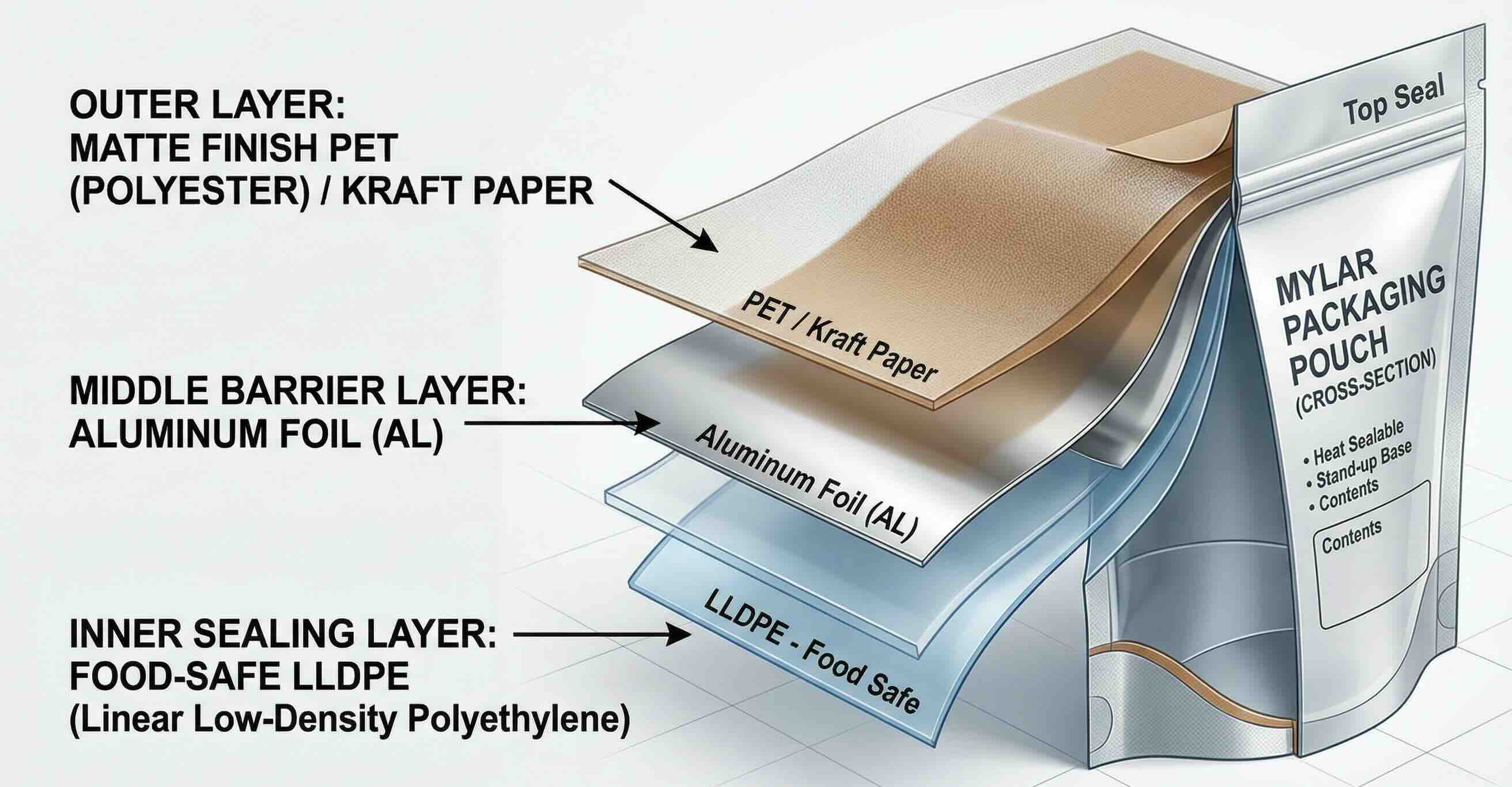
Coffee is one of the most demanding products to package. It needs protection from oxygen and moisture, but it also needs to release CO₂ after roasting. If that gas has nowhere to go, the bag will inflate and burst. This is why a degassing valve is not optional for coffee. It is essential.
| Layer | Material | Why It Matters |
|---|---|---|
| Outer | Matte PET or Kraft Paper | Premium feel, shelf presence, branding surface |
| Middle | Aluminum Foil (AL) or VMPET | Blocks 100% light and oxygen, the freshness layer |
| Inner | LLDPE | Food-safe, high-strength heat seal |
| Add-on | One-way Degassing Valve | Lets CO₂ out without letting oxygen in |
| Optional | Tin-tie or Pull-tab zipper | Re-sealable convenience for the customer |
Dry kibble has sharp edges. A thin film will get poked through during transit. Pet food bags also carry a lot of weight, so the inner sealing layer needs to be thicker than average. Odor control is another big deal. If the bag smells through on the shelf, it becomes a problem for retailers.
| Layer | Material | Why It Matters |
|---|---|---|
| Outer | PET (gloss) or Nylon (PA) | Sharp branding, strong base for printing |
| Middle | Nylon or VMPET | Puncture resistance and aroma barrier |
| Inner | LLDPE (thick gauge) | Heavy-duty seal that holds under weight |
| Add-on | Press-to-close zipper | Keeps food fresh, contains odors between uses |
| Optional | Side-gusset handle | Easy to carry for large 2kg bags |
Fine powder gets into the zipper tracks and stops them from sealing properly. One poor seal means moisture gets in and the entire batch of protein or collagen clumps up. The solution is an antistatic inner layer and a powder-proof zipper designed with wider tracks that push powder out when closing.
| Layer | Material | Why It Matters |
|---|---|---|
| Outer | PET or BOPP | Standard for mass-market supplement packaging |
| Middle | VMPET or Aluminum Foil | Blocks moisture, prevents clumping |
| Inner | Antistatic LLDPE | Stops powder from sticking to film and zipper |
| Add-on | Powder-proof zipper | Special track that clears powder on closing |
| Optional | Hang hole or wide opening | Retail display and easy scoop access |
Oils, salts, clay, and essential oils can literally eat through the wrong plastic over time. Beauty brands that use cheap generic film risk product contamination and packaging failures. The inner layer here has to be specifically tested for chemical resistance, not just food-safe grade.
| Layer | Material | Why It Matters |
|---|---|---|
| Outer | Soft-Touch PET | Velvet-like luxury feel that customers notice |
| Middle | VMPET or EVOH | Fragrance retention, keeps scent inside the bag |
| Inner | Special Grade LLDPE | Oil-resistant, no chemical leaching into product |
| Add-on | Tear notch | Easy tool-free opening for a premium experience |
| Optional | Die-cut window or Spout | Show product color, spout option for liquids |
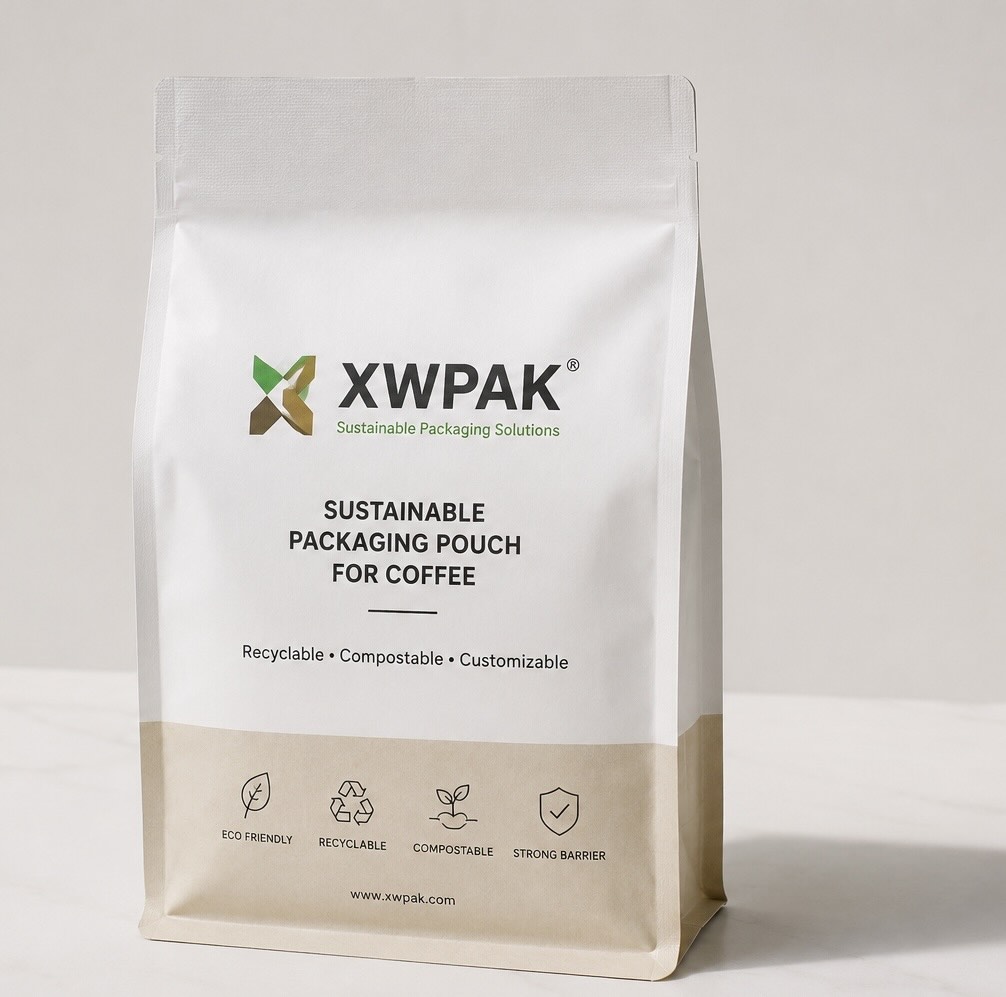
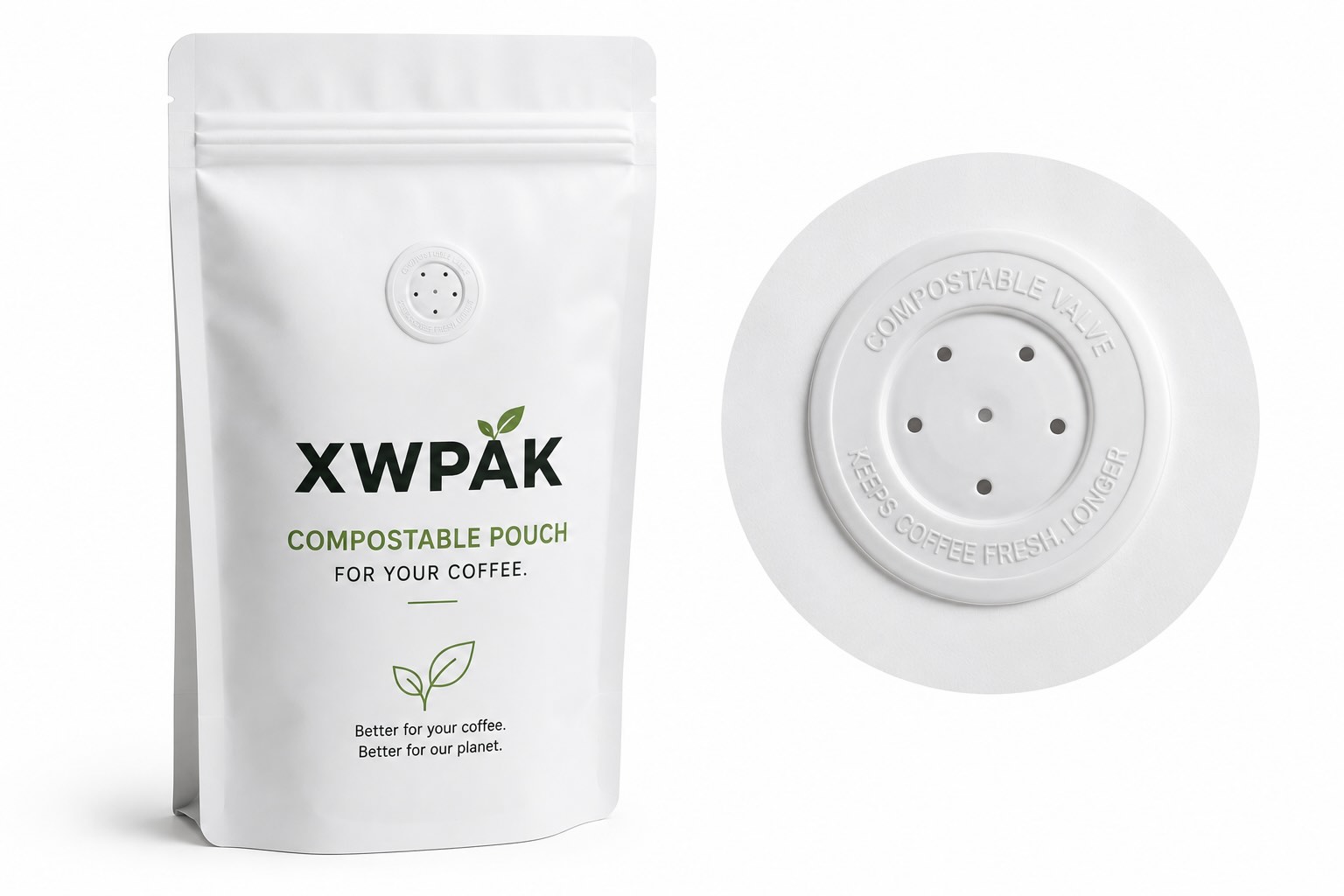
If your brand is positioned around sustainability or your customers expect eco credentials, there is a full compostable stack available. It works across all product categories. Keep in mind the barrier properties are slightly lower than aluminum foil options, so it is best suited for products with shorter shelf life or lower moisture sensitivity.
| Layer | Material | Why It Matters |
|---|---|---|
| Outer | MOPP or Kraft Paper | Natural, earthy look that fits a green brand identity |
| Middle | High Barrier PLA or Mono-material PE | Plant-based barrier, reduced plastic waste |
| Inner | PBAT/PLA | Fully compostable heat seal layer |
| Add-on | Compostable zipper and valve | Full compostable certification possible |
XWPak tip: Sustainable mylar bags are growing fast in demand, especially in the coffee, snack, and supplement categories where customers read labels carefully. If your product is organic or natural, switching to a compostable pouch can directly support your marketing message.
Packaging is the first thing a customer sees before buying. The print quality, finish, and special effects can make a simple bag feel like a premium product, or make a great brand look cheap. Here is exactly what works for each product type and why.
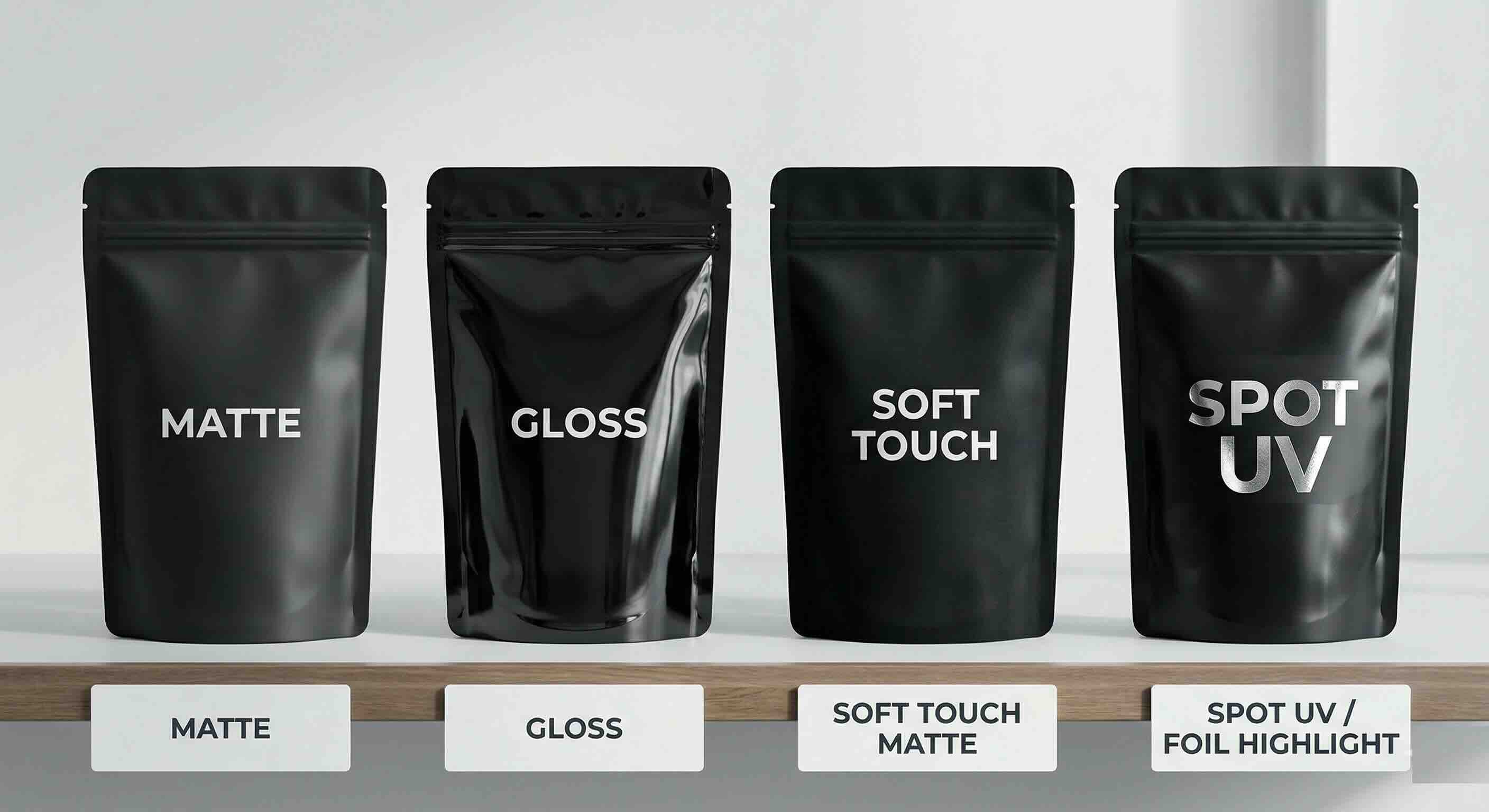
Coffee buyers are one of the most design-conscious consumer groups out there. They judge the bag before they even smell the beans. Matte finishes and gold foil stamping signal craft and quality without saying a word. If you are selling specialty or single-origin coffee, the bag needs to look the part.
| Element | Recommendation | Why It Works |
|---|---|---|
| Best print | Rotogravure or Digital | Rotogravure delivers deep, rich colors for large runs. Digital is ideal for seasonal small batches where you need fast turnaround without big order minimums. |
| Finish | Matte or Soft-Touch lamination | Gives an expensive feel in hand and avoids the glare you get under supermarket lights. Customers notice the difference immediately. |
| Special effect | Spot UV on logo or Gold Foil Stamp | Spot UV makes the brand logo pop under light. Gold Foil Stamp is the go-to for highlighting "Premium Roast" or single-origin claims without being loud. |
| Ink | Soy-based ink | Aligns with the natural and organic coffee brand image. Customers who read labels will notice and appreciate it. |
Pet food packaging goes through a rough journey from warehouse to trolley to kitchen floor. The print has to survive all of that without scratching or fading. Gloss is the right choice here, not just because it looks good but because it is actually practical for pet food environments.
| Element | Recommendation | Why It Works |
|---|---|---|
| Best print | Flexographic or Rotogravure | Both methods handle high-speed, high-volume production well. Flexographic is cost-effective for large runs, Rotogravure gives sharper color consistency across millions of units. |
| Finish | Gloss lamination | Easier to wipe clean if pet food oils or grease get on the outside. Also makes product photography look sharp and vivid on the shelf. |
| Special effect | Holographic elements | Works especially well for "Vet-Recommended" or "Pro" formula ranges. The shimmer catches the eye in a crowded pet food aisle. |
| Ink | Water-based ink | Safety-first choice. Also reduces odor on the bag exterior, which matters when customers are standing close enough to pick it up and read it. |
Supplement buyers want to trust what they are putting in their body. Busy, flashy packaging works against that trust. The goal here is to look professional and clinical, not exciting. A metallic Mylar look tells the customer the bag has serious barrier protection inside, which is a real selling point for protein and collagen.
| Element | Recommendation | Why It Works |
|---|---|---|
| Best print | Digital or Rotogravure | Digital is excellent for brands with 10 or more different flavors or SKUs. Rotogravure works better once you have a hero SKU with consistent high volume. |
| Finish | Matte or Satin | Both look medical and professional. This builds consumer trust in the supplement quality before they even read the label. |
| Special effect | Metallic finish (Mylar look) | Suggests high-barrier, clinical-grade protection. Customers associate the metallic look with serious, no-compromise packaging. |
| Ink | Solvent-free or UV-cured ink | High durability is needed here. Supplement bags get thrown around during shipping and stacked in warehouses. These ink types hold up without cracking or fading. |
A bath salt pouch or face mask gets held closely, smelled, and handled in a very personal setting. The finish has to feel good in the hand, not just look good on a shelf. The Soft-Touch velvet lamination is one of the most impactful upgrades you can make to a beauty pouch because customers feel the quality the moment they pick it up.
| Element | Recommendation | Why It Works |
|---|---|---|
| Best print | Digital printing | Perfect for high-detail imagery like floral patterns, skin textures, or gradient color backgrounds. Digital handles fine detail better than flexographic at lower quantities. |
| Finish | Soft-Touch (Velvet) lamination | Since customers handle these pouches closely, the velvet feel increases perceived value immediately. One of the simplest ways to make a product feel more expensive without changing the formula. |
| Special effect | Die-cut Window or Spot UV on benefits text | A die-cut window shows the color of the product inside, which is a strong visual cue for bath salts, clay, or scrubs. Spot UV on text like "100% Organic" draws the eye to key claims. |
| Ink | Compostable ink | If the brand uses organic or natural ingredients, compostable ink completes the story. It is a detail that eco-conscious customers genuinely appreciate and look for. |
For snacks, the bag has one job on the shelf: make the product look so good the customer wants to eat it right now. High-quality food photography combined with the right finish can do that. The partial matte and partial gloss combination is the most effective technique in this category.
| Element | Recommendation | Why It Works |
|---|---|---|
| Best print | Rotogravure | Best method for high-quality food photography on the bag. Colors stay consistent and rich across large print runs. |
| Finish | Partial Matte and Partial Gloss | Use matte for the background and high-gloss on the images of fruit or nuts. This contrast makes the food photography look mouth-watering while keeping the design looking premium. |
| Special effect | Metalized base | Gives a classic Mylar snack bag shimmer that reflects light on the shelf. Shoppers are drawn to it, especially in ambient or overhead retail lighting. |
| Ink | Bio-based ink | Supports the healthy snack marketing message. If the product is positioned as natural, organic, or clean-label, the ink choice on the bag should match that story. |
XWPak tip: If you are unsure between Rotogravure and Digital printing, the simple rule is this. Under 3000 units per SKU, go Digital. Above that, Rotogravure gives you better cost per unit and more consistent color across the full run.
Off-the-shelf bags get the product from A to B. Personalized mylar packaging pouches turn the product into a brand experience. When you customize the size, material stack, print finish, and special effects specifically for your product, a few things happen that directly affect your business.
First, the packaging fits the product properly. No air gaps, no overfilled bags, no wasted film. Second, the barrier properties are matched to what your product actually needs. A coffee brand that uses a generic bag without a degassing valve will lose product quality within weeks. Third, and this is often underestimated, customers notice when a brand has taken care over its packaging. It builds trust before they even open the bag.
Personalized mylar packaging pouches do not have to mean expensive. Digital printing now makes short runs of 500 to 1000 bags viable with full custom artwork. That means even small brands can have professional, shelf-ready packaging without committing to huge minimum orders.
Trend watch: The fastest growing packaging requests right now are compostable coffee bags with custom Kraft paper printing, and supplement pouches with digital print for 5 to 10 different flavor SKUs. Both are very doable with low minimums.
The best mylar bags for food storage are not the most expensive ones or the most feature-packed ones. They are the ones that are correctly sized for the product weight, built with the right material layers for the barrier requirements, and printed in a way that matches the brand's position in the market.
A coffee brand needs a degassing valve and a matte Kraft outer. A pet food brand needs a thick puncture-resistant nylon layer and a gloss finish. A supplement brand needs a powder-proof zipper and an antistatic inner film. And any brand that wants to go green has a full compostable option available, from the outer layer right down to the zipper and valve.
If you are not sure where to start, use this guide as a reference and reach out to XWPak with your product weight and category. We will match you to the right spec from the start, so there are no surprises when the bags arrive.