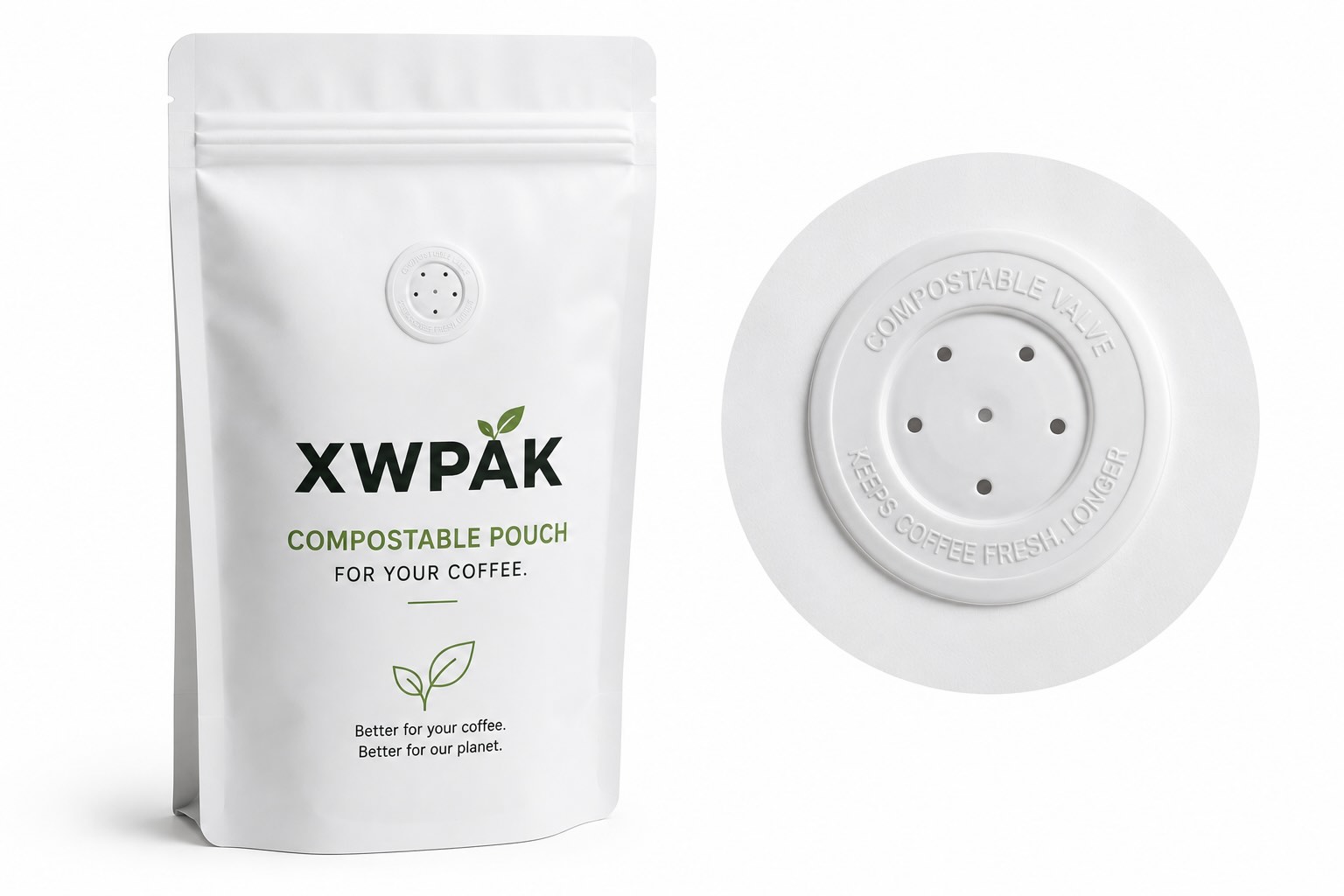
We go beyond the marketing claims and get into the actual materials, certifications, and performance numbers that matter.
If you have spent time looking at food storage options, you have probably come across the term "Mylar bags" about a hundred times. Survivalists swear by them. Emergency food companies build their entire supply chain around them. But the question of whether they are genuinely safe for long-term food contact is one that most product pages completely sidestep.
We are going to answer it properly, with the actual material science, the relevant FDA regulations, and the performance benchmarks that separate a bag worth using from one that is not.
"Mylar" is not a material category. It is a brand name originally owned by DuPont (now Dupont Teijin Films) for a specific type of plastic film: Biaxially Oriented Polyethylene Terephthalate, commonly abbreviated as BoPET.
The "biaxially oriented" part describes the manufacturing process. During production, the PET film is stretched in two perpendicular directions simultaneously, which reorganizes the polymer chains and dramatically increases the film's tensile strength, dimensional stability, and barrier properties. This is not a minor manufacturing detail. That stretching process is what gives BoPET its exceptional oxygen and moisture resistance, and what makes it suitable for food packaging applications in the first place.
In practice, the bags sold as "Mylar bags" in the food storage market are multi-layer laminated structures that use BoPET as their primary structural component. The base material is technically the same class of polymer used in everything from beverage bottles to photographic film, just produced in a specific orientation and combined with other layers for additional functionality.
Worth knowing: Not every product marketed as a "Mylar bag" actually uses high-grade BoPET. Some budget products use lower-quality PET film or thinner gauges that underperform on barrier metrics. The brand name has become generic, which creates real inconsistency in what you are actually buying.
A properly constructed food-grade Mylar bag is not a single material. It is a laminate, meaning it bonds multiple distinct layers together to combine the properties of each. Understanding what those layers are and what each one does is the foundation of understanding whether a bag is actually food safe.
Premium bags may include additional intermediate layers, such as an EVOH (Ethylene Vinyl Alcohol) co-extrusion between the foil and sealant layer. EVOH has an oxygen transmission rate in the range of 0.01 to 0.05 cc/m²/day at 0% relative humidity, making it one of the most effective oxygen barrier materials available for flexible packaging. When combined with the aluminum foil layer, this creates a near-complete barrier against oxygen ingress.
The adhesive used to bond these layers together also matters. Solvent-based adhesives that retain residual solvents after curing represent a contamination risk. High-quality manufacturers use solvent-free polyurethane adhesives that fully cure without leaving residue that could migrate into food contact surfaces.
In a properly manufactured food-grade Mylar bag, the aluminum foil layer never contacts your food. It is laminated between the outer BoPET layer and the inner food-contact sealant layer (typically LLDPE or LDPE). The foil is mechanically and chemically bonded to surrounding layers on both sides. For migration to occur, both the sealant layer and the adhesive layer would need to fail simultaneously, which does not happen under normal use conditions with compliant materials.
This concern does have some basis in science when applied to the wrong product. Bare aluminum foil in direct contact with high-acid foods like tomatoes or citrus can experience some surface oxidation and minor ion migration. But that is a completely different scenario from laminated aluminum foil that has no food-contact surface whatsoever.
The correct question to ask about aluminum in Mylar bags is not whether it leaches, but whether the foil gauge is adequate. Foil that is too thin (below 7 microns) is prone to flex cracking during handling and storage, which can create microscopic pinholes that compromise the oxygen and moisture barrier. This is a structural quality issue, not a leaching issue.
Food contact safety in the United States is governed by Title 21 of the Code of Federal Regulations. For Mylar-style food bags, two sections are directly relevant:
This regulation covers the use of polyethylene terephthalate film in food contact applications. It sets conditions on polymer purity, manufacturing additives, and the conditions under which the material can be used in contact with food.
Covers the inner LLDPE or LDPE sealant layer that actually contacts food. Compliance here is non-negotiable because this is the only layer with direct food contact throughout the product's shelf life.
The adhesive systems used to laminate the layers together must comply with this regulation. Non-compliant adhesives can release low-molecular-weight compounds that migrate through the sealant layer into food over time.
For internationally sourced bags or products destined for the European market, compliance with EU 10/2011 Regulation on plastic materials in food contact is the applicable standard, with overall migration limits set at 10 mg/dm².
When a manufacturer claims their bags are "food safe," these are the actual certifications that give that claim meaning. Vague claims without regulatory reference numbers are not verifiable and should not be trusted for long-term food storage. Have a look at XWPak's certifications.
The reason food-grade Mylar bags are used for long-term storage is their barrier performance against the three primary agents of food degradation: oxygen, moisture, and light. Here is what those numbers actually look like for high-quality product, and why they matter.
| Bag Thickness / Grade | OTR (cc/100 in²/day) | Shelf Life Impact | Assessment |
|---|---|---|---|
| 4 mil, no foil layer | 0.30 to 0.50 | 1 to 2 years maximum | Inadequate for long-term storage |
| 5 mil, thin foil (5 micron) | 0.05 to 0.10 | 3 to 5 years | Foil prone to flex cracking |
| 7 mil, standard foil (7 micron) | Below 0.01 | 10 to 15 years (with oxygen absorbers) | Recommended minimum |
| 7 mil, premium foil (9 micron) + EVOH | Below 0.005 | 15 to 25+ years (with oxygen absorbers) | Optimal for emergency food storage |
To put the 0.01 cc/100 in²/day threshold in context: a standard kitchen zip-lock bag has an OTR of roughly 1.0 to 2.5 cc/100 in²/day. That is more than 100 times higher. The difference in practical terms is the difference between food that stays stable for decades and food that oxidizes within months.
| Material / Grade | WVTR (g/m²/day) | Practical Implication |
|---|---|---|
| Standard LDPE bag | 5.0 to 8.0 | Moisture ingress will cause clumping and microbial activity within months |
| Basic foil laminate bag | 0.10 to 0.50 | Significantly better but still insufficient for multi-year storage in humid climates |
| Premium 7-mil food-grade Mylar | 0.01 or below | Effectively prevents moisture ingress for 10+ years under normal storage conditions |
For dry goods like rice, wheat, and legumes, moisture ingress above roughly 14% relative humidity within the package creates conditions where fungi and bacteria can establish. A WVTR of 0.01 g/m²/day means that under typical storage conditions, moisture ingress into a sealed bag remains negligible across years, not months.
Properly laminated aluminum foil achieves near-total opacity to visible and ultraviolet light. Light-induced oxidation (photo-oxidation) is a significant degradation pathway for fats, vitamins, and pigments in stored foods. A bag with measurable light transmission is functionally compromised for long-term storage of anything containing lipids or light-sensitive nutrients.
Two components that rarely get discussed in product descriptions are the printing inks applied to the outer layer and the adhesive system used in lamination. Both carry real food safety implications.
Food-contact-compliant inks for flexible packaging are formulated under regulations including FDA 21 CFR 175.300 and EU Regulation 1935/2004. The primary concerns are:
Photoinitiator migration: UV-cured inks require photoinitiators to trigger polymerization. Low-molecular-weight photoinitiators such as benzophenone and ITX (isopropylthioxanthone) have been identified as potential migrants through flexible packaging laminates. Food-safe inks either use high-molecular-weight photoinitiators that cannot migrate through polymer structures, or rely on electron beam curing which requires no photoinitiators at all.
Heavy metal pigments: Some commodity pigments used in printing contain cadmium, lead, or hexavalent chromium compounds. Compliant food packaging inks use alternative pigment systems that meet migration limits defined in EN 71-3 or equivalent standards.
Solvent retention: Solvent-based flexographic inks require controlled drying and curing conditions to prevent residual solvent entrapment within the laminate structure. Residual solvents (particularly toluene and methyl ethyl ketone) can migrate through the structure over time. Responsible manufacturers verify residual solvent levels at below 50 mg/m² total, with individual restricted solvents below 10 mg/m².
The shift in the industry toward solvent-free polyurethane (PU) adhesive systems addresses the single largest contamination risk in laminate production. Solvent-free PU adhesives are two-component systems that cure through a chemical reaction rather than solvent evaporation. This eliminates the possibility of residual solvent entrapment between layers.
However, two-component PU systems require precise mixing ratios and adequate curing time before slitting and bag conversion. Undercured adhesives retain reactive isocyanate groups that can migrate into food. High-quality manufacturers enforce minimum curing periods of 72 hours at controlled temperature before processing laminates into bags.
Given everything above, here is a practical decision framework based on intended use:
| Use Case | Minimum Thickness | Key Requirements |
|---|---|---|
| Short-term dry goods (under 2 years) | 3.5 mil | Basic foil laminate, food-contact inner layer, heat-sealable |
| Medium-term food storage (2 to 5 years) | 5 mil | 7-micron foil minimum, LLDPE inner layer, OTR below 0.05 |
| Long-term emergency food storage (5 to 25 years) | 7 mil | 7 to 9 micron foil, OTR below 0.01, WVTR below 0.01, oxygen absorber compatible |
| Commercial food packaging (retail) | Varies | Full regulatory documentation, third-party migration testing, COA on all materials |
One practical test you can do yourself: hold a sealed bag up to a bright light source in a dark room. Any visible light transmission through the body of the bag indicates inadequate foil coverage or thickness. A bag that passes light is a bag that passes photo-oxidation, which undermines the entire point of using foil laminate packaging.
Minimum 7 mil total thickness for long-term storage
Aluminum foil layer of at least 7 microns (9 microns preferred)
OTR at or below 0.01 cc/100 in²/day (ask for the test data)
WVTR at or below 0.01 g/m²/day
FDA 21 CFR 177.1630 compliance for BoPET outer layer
FDA 21 CFR 177.1520 compliance for polyethylene sealant inner layer
Solvent-free adhesive system with documented cure time
Food-safe inks with photoinitiator migration compliance
Certificate of Analysis (COA) available from manufacturer
At XWPak.com, we manufacture food-grade Mylar bags to the full specification described in this article, not to the minimum standard that lets something be labeled "food safe." The distinction matters for anyone storing food beyond a couple of years.
Our standard food storage bags use a genuine 7-micron aluminum foil core bonded with a solvent-free two-component polyurethane adhesive system. The inner sealant is LLDPE compliant with 21 CFR 177.1520. Our laminate OTR is verified below 0.01 cc/100 in²/day through third-party testing, not claimed without data. We can provide Certificates of Analysis and migration test reports for any order, because that documentation should be standard, not an upgrade.
We also produce custom barrier laminate bags for commercial food manufacturers who need specific gauge combinations, multi-layer structures with EVOH, or modified atmosphere packaging (MAP) specifications. If you are trying to match a technical requirement and cannot find what you need off the shelf, talk to our team. That is the kind of conversation we are built for.
Get full technical specifications, COA documentation, and custom bag options for any food storage application.
Visit XWPak.comThe bottom line on Mylar bag safety is this: the material category, when properly specified and manufactured, is genuinely well-suited to long-term food storage. The regulatory framework exists, the material science is solid, and the barrier performance achievable at the 7-mil specification is exceptional. The problem is not the concept of a Mylar bag. The problem is that the label gets applied to a wide range of products, some of which meet the real technical standard and some of which are closer to a foil-looking plastic pouch. Knowing the difference is the whole point.