A practical, roaster-focused comparison of two of the most popular coffee packaging formats on the market today.
Let's say you've spent the last six months sourcing a single-origin Ethiopian natural process. You've dialled in the roast profile, nailed the degassing window, and you know the cup is exceptional. What happens next? Someone picks up the bag. They look at it. They form an opinion before a single gram of coffee hits the grinder.
That's not a marketing observation. That's just how buying decisions work, whether we like it or not. And what most roasters overlook is that the format of the bag, not just the label design, carries a huge amount of that first impression. A side gusset bag communicates something different from a flat bottom bag. They behave differently on a shelf, in a subscription box, and in a customer's kitchen.
This post is a no-nonsense breakdown of both formats. Not a sales pitch. If side gusset is genuinely better for your operation, we'll tell you. If flat bottom makes more sense, same story. Let's get into it.
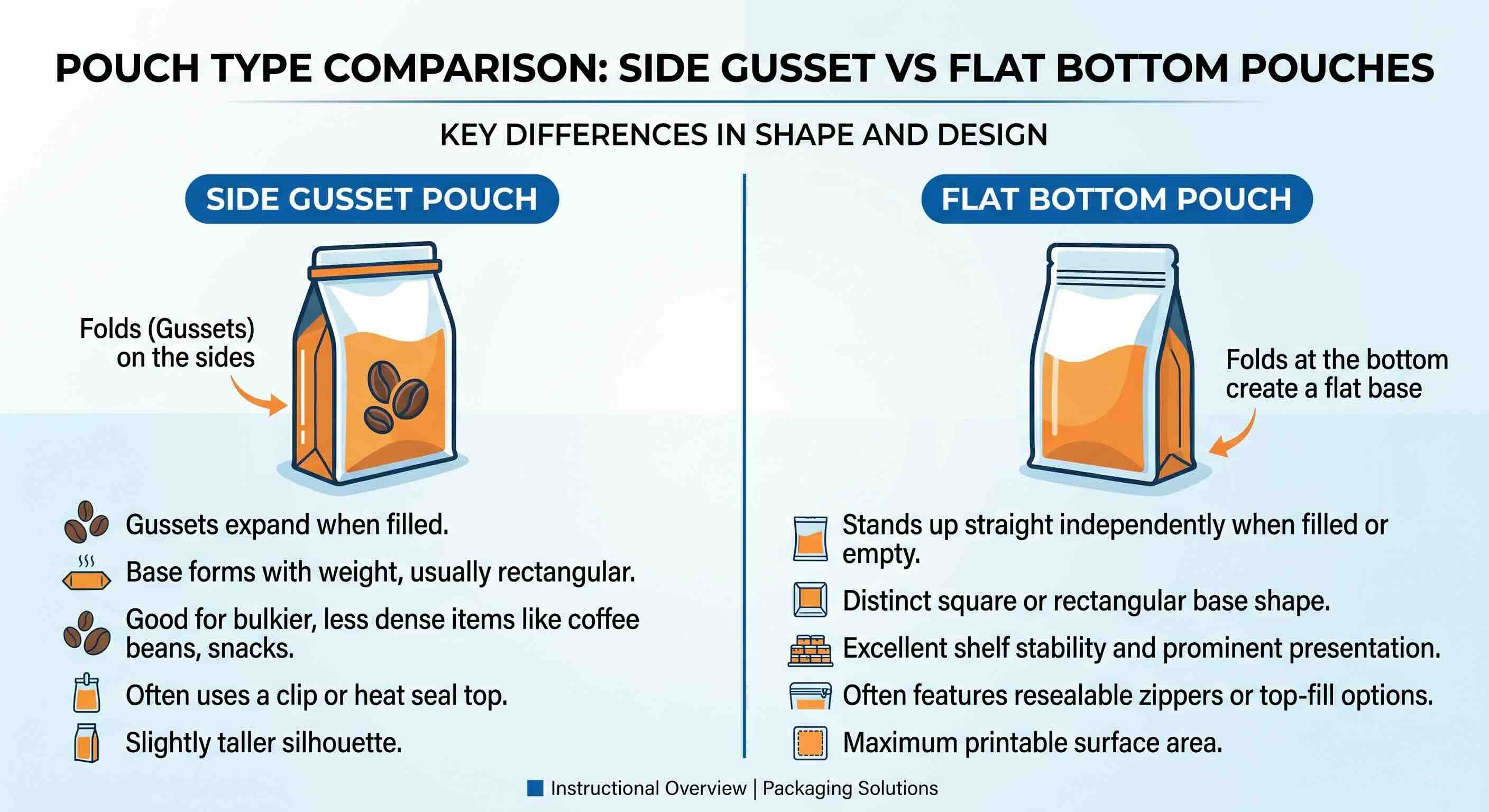
Before comparing, it helps to understand exactly what you're looking at when either bag lands on your packing table.
Side gusset bags have two pleated folds running down each side. When the bag is empty, it lays completely flat, which makes it efficient to store and ship. Once filled, those gussets expand outward, giving the bag depth. Depending on how it's displayed, it can stand on shelf or lay flat in a shipper box, a quality that makes it genuinely versatile.
At the back, the bag is sealed with a fin seal running vertically down the centre. The base is folded rather than formed, which keeps production costs lower. Some roasters know this format as a "brick-style" bag when it's laid on its side, in the style of classic European coffee bricks.
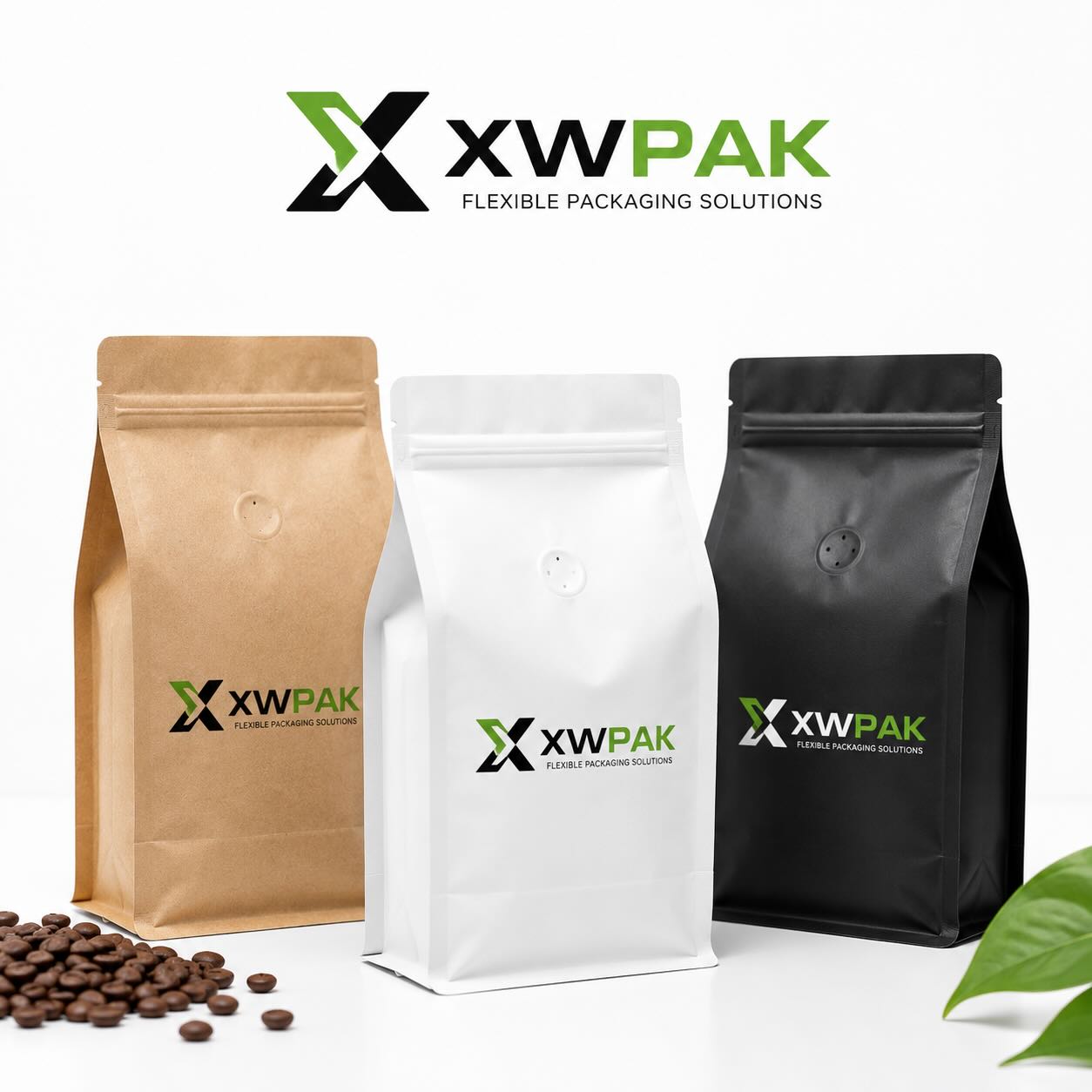
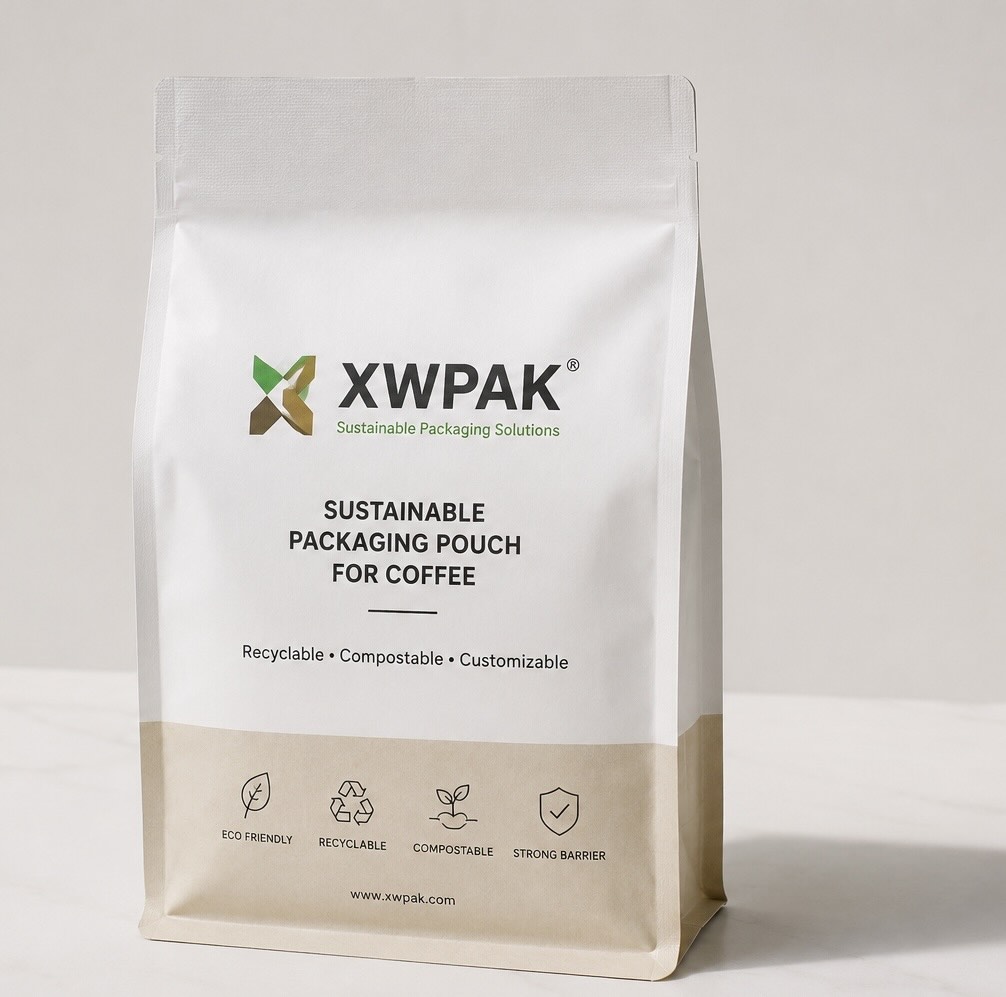
Flat bottom bags, also called box pouches or quad-seal pouches, have a pre-formed base panel. That base is what gives the bag its signature stability. It stands upright on its own with no external support, no shelf ledge required, no leaning against neighbouring products. The structure creates four distinct printable panels and a wide, billboard-style front face.
The sealing at the base uses either a K-seal (angled bottom corner seals) or a pinch-seal, both of which contribute to the structured shape. Because of this formed base, the bag cannot lay flat in the same way a side gusset can. It takes up more packing volume when empty.
Quick Format Summary
Side gusset: lays flat when empty, stands when filled, fin-sealed back, lower tooling cost, compact for shipping.
Flat bottom: always stands, pre-formed base, K-seal or pinch-seal, four panels, wider print area, takes more space when empty.
This is the section most roasters care most about, so let's not bury it.
A flat bottom bag offers roughly 20 to 25% more front-facing print area than a side gusset bag of equivalent volume. That's not a minor difference. When you're competing on a specialty retailer's shelf next to six other roasters, that extra real estate is where your brand story lives. Your origin details, your tasting notes, your roast date, your logo, all of it has room to breathe on a flat bottom.
Most UK supermarkets and a growing number of specialty independents now specify standing bags in their planogram requirements. If you're pitching to wholesale accounts, flat bottom bags simply tick a box that side gusset bags often don't.
That said, side gusset bags have a real advantage in a context that's becoming increasingly important: mail-order subscription boxes. Because the bag collapses flat when not filled, and because it has less depth when standing, it packs more efficiently. You can fit more bags into a standard postal box, reduce your dimensional weight charges, and avoid the awkward bulge that a flat bottom bag creates when sandwiched into a cardboard mailer.
Shelf display? Flat bottom wins on presence and planogram compliance.
Subscription or mail-order? Side gusset packs better and ships cheaper.
One more thing worth mentioning: hang-tag hooks and clip-strip display systems work equally well with both formats. If you sell through the kind of specialty shop that clips bags to a metal strip rather than standing them on a shelf, the format decision matters less from a display perspective.
Coffee is one of the most demanding packaging applications in the food industry, second only to pharmaceutical products in some respects. Understanding why matters a lot when you're choosing materials for either bag format.
Freshly roasted coffee releases carbon dioxide continuously for anywhere between three and fourteen days after the roast. This process is called degassing. If you seal coffee into an airtight bag without any form of gas management, one of two things happens: the bag inflates until the seals fail, or it pops entirely. Neither is a great look when it shows up at a customer's door.
The solution is a one-way degassing valve, a small disc typically heat-welded to the bag that allows CO2 to escape while blocking oxygen from entering. Without a valve, specialty coffee packaging simply doesn't work properly. On side gusset bags, valves are almost always placed on the back panel. On flat bottom bags, you have the added option of base panel placement, which keeps the front face completely clean for branding.
The multilayer film structure of your bag determines how long your coffee stays fresh. Here's how the main options stack up:
| Material Structure | Barrier Level | Best For |
|---|---|---|
| KPET / Foil / PE | Maximum (2 to 5 year shelf life) | Aged lots, green-adjacent, long-haul retail |
| KPET / VMPET / PE | High, lighter weight | Specialty retail, wholesale accounts |
| Kraft / PE | Lower | Local roasters, sold within 4 weeks of roast |
| Mono-material PE | Around 10cc/m²/day OTR | Fast stock turn, sustainability-focused brands |
| NatureFlex / PLA (Compostable) | Moderate (industrial compost only) | B Corp, EU Ecolabel, sustainability storytelling |
Mono-material PE bags deserve a special mention because they're a genuinely workable option now, not just a compromise. With oxygen transmission rates now around 10cc per square metre per day, they hold up well for roasters with fast stock turnover. More importantly, they're fully recyclable via LDPE drop-off points across the UK and EU, which matters a lot to customers in 2025 and beyond.
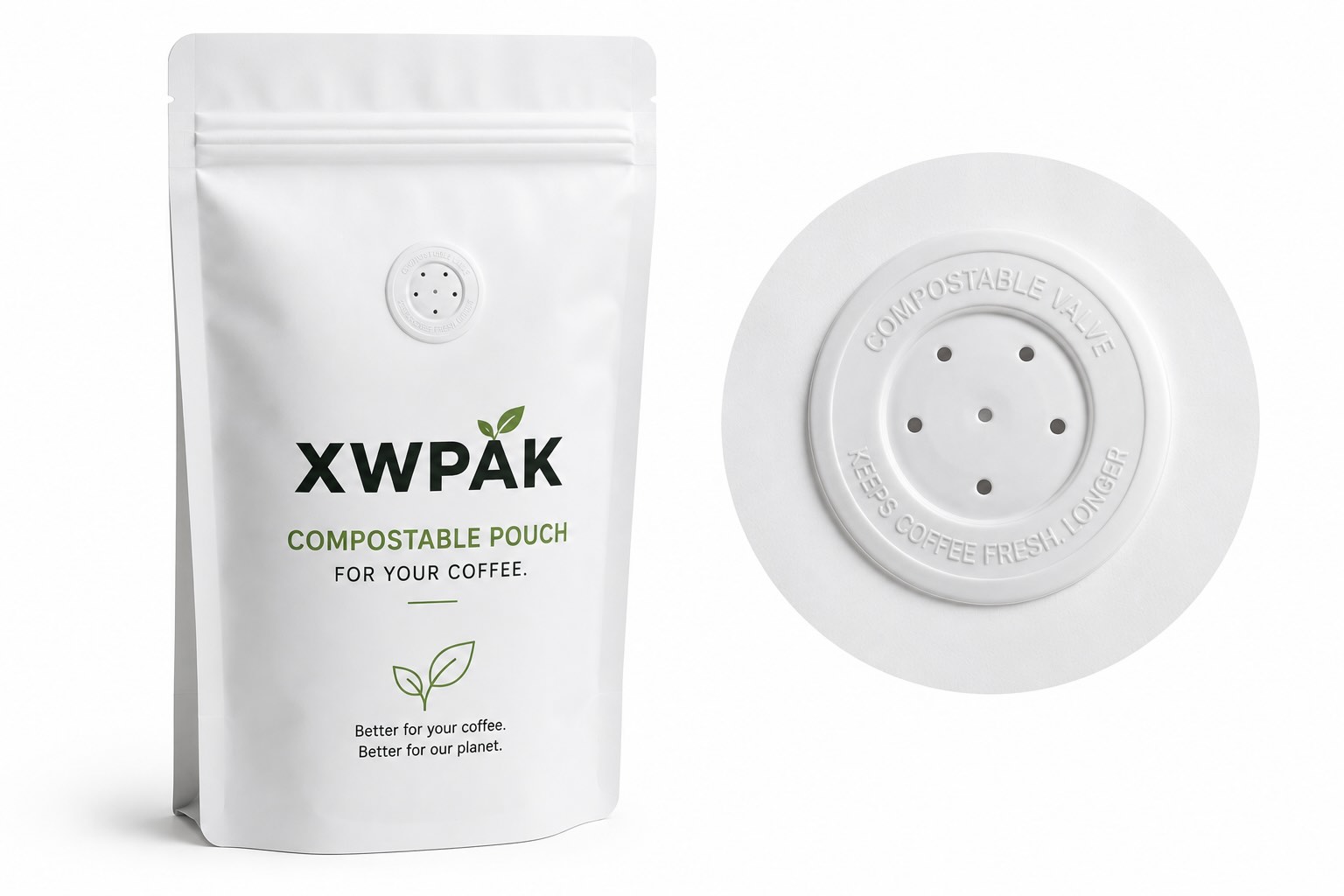
Compostable bags made from NatureFlex and PLA are growing in demand, particularly among roasters pursuing B Corp certification or EU Ecolabel accreditation. The main challenge remains valve compatibility since most commercially available degassing valves are not home-compostable, only industrial-compostable. If this is a priority for you, it's worth having a detailed conversation about the full packaging system rather than treating the bag and the valve as separate decisions.
Both side gusset and flat bottom formats are available as gusset pouches with full barrier customisation, valve placement options, and your choice of film structure. Speak to us about which combination fits your roasting schedule.
How a customer opens and reseals your bag is a real part of the product experience. It affects freshness, usability, and how long the customer actually keeps the bag rather than decanting into a separate canister. These details matter more than most roasters give them credit for.
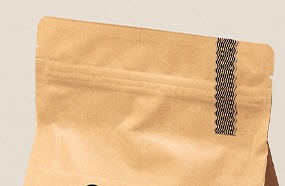
Press-to-close zippers (the kind you pinch flat to seal) are common and cost-effective. They work fine for home consumers who open the bag once or twice a week. Coil zippers, which operate more like a mechanical track, are better suited to high-frequency use. If your coffee is going into a busy café or a restaurant kitchen where someone opens the bag multiple times a day, a coil zipper will hold up significantly better over its lifespan. It's a small premium that avoids a lot of customer complaints.
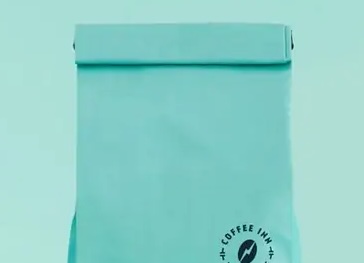
Tin ties are the folded metal strips you see on traditional kraft coffee bags. They fold down to close the bag after opening and have a distinctly artisan, tactile feel that a lot of specialty roasters love. They suit kraft-forward aesthetics particularly well. One honest note: tin ties are not truly resealable in the way a zipper is. They slow air ingress, but they don't create the same airtight closure. For coffee that needs to stay fresh for several weeks after opening, a zipper is the better technical choice.
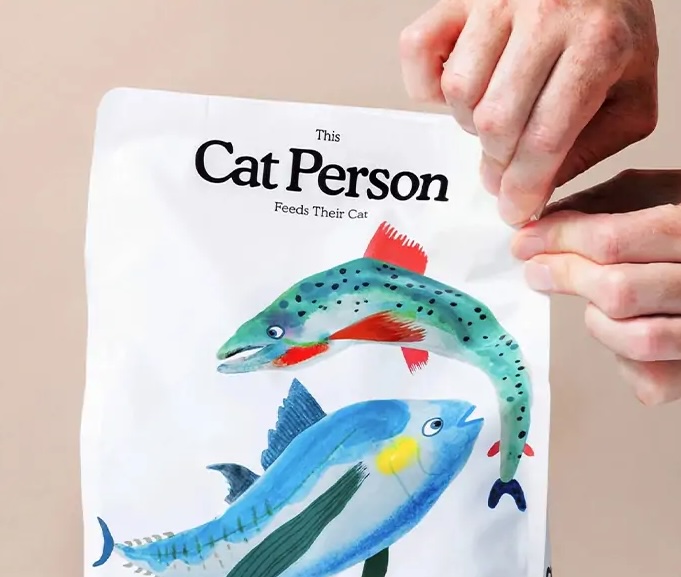
Some valve bags are designed with no zipper or tin tie at all. The assumption is that the customer will open the bag and immediately transfer the coffee into a separate airtight canister. This is more common in wholesale and hospitality contexts. It keeps the bag clean, minimal, and slightly cheaper to produce.
Valve Placement Note
Both side gusset and flat bottom bags support valve placement on the back panel. Flat bottom bags additionally allow valve placement on the base panel, which keeps the front face 100% clean for branding. If you're designing for retail where front label real estate is critical, this is worth factoring in.
The physical finish on your bag is as much a brand touchpoint as the design itself. Specialty coffee buyers run their fingers over bags before they read them. Here's what the finish options communicate and where each works best.
Matte kraft texture is the most popular finish in specialty coffee for a reason. It reads as craft, care, and authenticity. It photographs well, it feels good in the hand, and it works equally on both bag formats. If you're unsure where to start, this is a safe first direction that rarely feels out of place.
Spot UV on the logo creates a high-contrast gloss element against a matte background, drawing the eye directly to the brand mark. It's subtle when done right and immediately elevates the perceived value of the packaging.
Metallic foil stamping is the right choice for premium single-origin lines or limited-release coffees where the packaging needs to signal rarity. It doesn't suit every brand, but when it fits, it's unmistakable.
Full-surface digital print opens up photography, gradients, and complex background treatments that flexographic printing can't match. The wider front panel of a flat bottom bag makes this finish particularly impactful there, you have more canvas to work with.
Transparent panels show the actual coffee inside, which is a useful trust signal for whole-bean bags. Customers who care about roast level and bean appearance appreciate the visibility. It's less relevant for ground coffee.
Print Services Available
We offer design from scratch, redesign from existing artwork, and print to client-supplied files. Rotogravure printing for high-volume orders. Digital printing for low MOQ runs where you need short lead times or want to test a new design before committing to volume.
We also use bio-based inks across our print range, which is worth noting for roasters working toward B Corp certification or EU Ecolabel qualification. It's a detail that can make a meaningful difference in sustainability audits.
Here's the honest decision guide. No fluff, no pressure toward either format.
| If your situation is... | Choose this format |
|---|---|
| Selling through retail, need bags to stand independently | Flat bottom bag |
| Running a mail-order subscription, need compact packing | Side gusset bag |
| Roast-to-order, fast stock turn under three weeks | Kraft side gusset with tin tie |
| Selling single-origin at a premium price point | Flat bottom, matte finish, spot UV |
| Scaling volume across multiple SKUs | Side gusset (lower tooling cost) |
| Want full recyclability via LDPE drop-off | Mono-material PE side gusset |
Many roasters run both formats at the same time. A flat bottom for their flagship retail blend and a side gusset for their rotating single-origins that ship via subscription. There's no rule that says you have to pick one and stick to it.
We hold stock across the USA, Canada, the UK, and the EU. Whichever market you're roasting for, you're not waiting weeks for packaging to arrive from overseas.
Same-day production is available on confirmed orders. For roasters who batch-roast and need packaging ready to fill immediately, that's not a small thing. Delays in packaging are one of the more frustrating bottlenecks in a roasting operation, and we've built our process specifically to avoid them.
Our minimum order quantities are deliberately low, which makes us a genuine option for micro-roasters and small-batch specialty releases. You don't need to commit to 20,000 units of a new design to test how it lands with your customers. Start small, see what works, scale when you're confident.
Worldwide delivery available on all orders.
Watch Before You Order
Want to see our coffee bags up close before committing? We have detailed product walkthroughs, material comparisons, and packaging guides on our YouTube channel. Visit the XWPak YouTube channel here and see the bags in action.
Ready to Get Started?
Whether you're ordering 500 or 50,000 units, our wholesale gusset bags are available with short lead times and low minimum orders. Both side gusset and flat bottom formats, in the material and finish combination that fits your brand.
Browse Coffee Bag OptionsSide gusset and flat bottom bags are both excellent options for specialty coffee, and neither is universally better than the other. The right choice depends on your distribution channel, your brand position, your volume, and honestly, how you want your customer to feel when the bag lands in their hands.
If you sell face-to-face at markets, through cafes, or on a shelf next to other roasters, the flat bottom gives you the presence to compete. If you ship directly to subscribers, the side gusset makes the logistics work harder for you. If you're scaling fast across multiple origins, the lower tooling cost of side gusset lets you iterate faster without penalty.
Choose based on your operation, not on what looks impressive in someone else's flat lay. That Ethiopian natural process deserves packaging that works as hard as you did to source it.