Pet food needs a 100 to 140 micron laminate with aluminium or metallised barrier, and the bag's bottom seam needs to hold weight loads up to 10kg without seal fatigue across distribution and shelf storage. Anything thinner fails on rodent and insect chew-through during warehouse storage. Anything without barrier loses palatability through fat oxidation within 8 to 12 weeks. The flat bottom format earns its place in pet food because the box-shaped silhouette stacks efficiently in retail end-cap displays and gives the brand five printable panels for shelf differentiation that round-bottom and pillow pouches cannot match.
This guide covers the engineering trade-offs that matter for pet food brands choosing flat bottom packaging film thickness selection by product weight, barrier specification by ingredient type, seal seam construction for heavy fills, and the size bands where flat bottom outperforms gusset alternatives. Brands moving from contract packers to in-house custom packaging typically order custom flat bottom pouches in 1kg to 5kg formats first, then expand into smaller treat formats and larger kibble formats once the brand's packaging system is established.
Dry kibble and extruded biscuits the largest pet food category by volume — need 100 to 120 micron laminate with aluminium or metallised PET barrier. The barrier blocks oxygen ingress (target oxygen transmission rate below 1 cc per square metre per day) which is what stops the fat coating on kibble from oxidising and turning rancid. Without that barrier, kibble palatability drops measurably within 8 to 12 weeks of production, well inside the typical 12 to 18 month shelf-life claim on the bag.
Freeze-dried and air-dried protein products the fastest-growing premium pet food segment need stronger barrier than kibble. Freeze-dried meat, organ, and fish products oxidise faster than coated kibble because the surface area to mass ratio is higher and the lipids are exposed rather than coated. Specify 120 to 140 micron laminate with aluminium foil barrier (not metallised PET) for shelf-lives beyond 12 months. Brands selling freeze-dried raw food at premium pricing cannot afford palatability complaints — a single bag rejected by a customer's dog drives a return that costs more than the entire pack of bags.
Wet and semi-moist pet food products are not typically packaged in flat bottom pouches they require retort-sterilisable structures or chub-pack formats. Treat products in the soft-baked or jerky category fit the flat bottom format with 100 to 120 micron barrier laminate, with closer attention to moisture barrier (water vapour transmission rate below 5 g per square metre per day) to prevent texture changes during shelf storage.
Standard flat bottom pouch construction holds product weights up to 5lb (2.3kg) reliably across distribution. Beyond that weight, the bottom seal seam needs reinforcement to handle the loads pet food brands typically ship 4kg to 10kg formats for medium-breed dog food, 5kg to 15kg for large-breed. Reinforced bottom seams use wider seal width (12mm to 15mm versus the standard 8mm to 10mm) and higher seal pressure during production. The film structure also matters: heat-seal layers based on metallocene polyethylene (mLLDPE) deliver stronger weight-bearing seal integrity than standard LLDPE at the same thickness.
For dog food bags carrying weights above 7kg, brands often pair flat bottom construction with a carrying handle reinforced into the top seal. This is where the format starts overlapping with bottom gusset bag construction, which is purpose-built for heavier weights up to 10kg. The decision between flat bottom and bottom gusset for a 5kg to 8kg pet food bag comes down to brand positioning flat bottom delivers premium shelf presence, bottom gusset delivers cost efficiency. Brands selling at premium price points (above $40 per bag) usually choose flat bottom; brands competing on shelf price usually choose bottom gusset.
Flat bottom pouches make sense for pet food in three specific size bands. Treat-size formats from 100g to 500g work well in flat bottom because the small upright silhouette stands proud on shelf alongside the larger main-meal SKUs in the same brand line. Mid-size formats from 1kg to 3kg are the sweet spot flat bottom delivers premium presentation at a weight where the format's structural strength is more than sufficient, with no need for reinforced construction. Large formats from 4kg to 5kg work but require reinforced bottom seal seams; above 5kg, bottom gusset becomes the more economical structure.
Pet food flat bottom pouches almost always need a resealable closure because the consumer use cycle is multi-week a 2kg dog food bag is opened daily for 3 to 5 weeks, very different from a coffee bag opened twice a week for 2 weeks. Press-lock zippers are the most common choice for pet food flat bottom because they deliver reliable reseal across hundreds of open-close cycles and don't add the cost of a slider mechanism. Slider zippers are reserved for premium positioning where the brand wants the closure itself to signal quality. Tear notches at the top of the bag give the customer a clean opening tear without scissors, which matters more than packaging engineers usually credit frustration with bag opening is a real driver of brand abandonment.
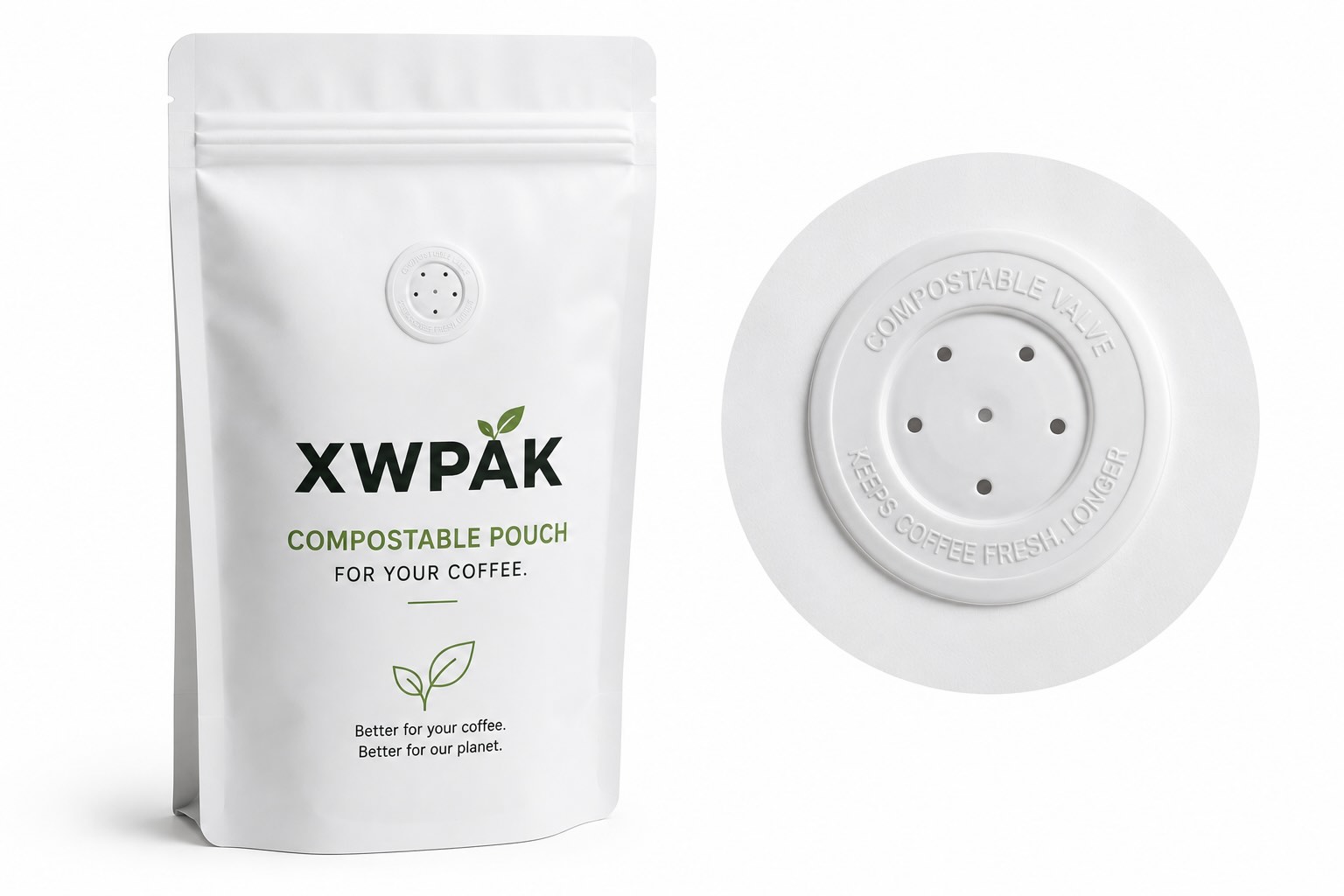
For brands committed to sustainable packaging, the closure choice has additional weight. Compostable flat bottom pouches built on Kraft/PLA/NatureFlex structures pair best with paper-coated wire tin tie closures or compostable press-lock zippers. Standard plastic zippers contaminate the compost stream and invalidate the OK Compost certification. The same principle applies to recyclable mono-material PE pouches the zipper must be matched mono-material PE for the structure to remain curbside or store-drop-off recyclable. Closure-structure mismatch is the most common reason a "sustainable" pet food bag fails to actually deliver on its sustainability claim at end-of-life.
Pet food packaging in the USA falls under FDA Center for Veterinary Medicine (CVM) regulations, which set specific food-contact requirements for materials in direct contact with pet food and treats. EU pet food packaging requires compliance with EU Regulation 10/2011 for food-contact plastics, plus the more general EU pet food labelling requirements. Major retail chains stocking premium pet food Petco, PetSmart Premium, independent pet specialty retailers, European pet specialty chains increasingly require BRC Global Standards certification or equivalent supply-chain audits from packaging vendors. A flat bottom pouch produced in a non-audited facility may meet basic regulatory compliance but will not meet retail buyer requirements for premium tier placement.
Custom flat bottom pouches manufactured for pet food at XWPAK ship from a BRC-certified facility with FDA and EU Regulation 10/2011 food-contact compliance, with low minimum order quantities starting at 1,000 units for digital print and same-day production start on artwork approval. For brands building a sustainable pet food packaging strategy, see our guide on custom pet food packaging across format and material options.
Building a custom flat bottom pouch programme for your pet food brand?
Send us your product weight, ingredient profile, and shelf-life target. We'll specify the right film structure, barrier layer, and seal construction for your category.
Get A QuotePet food flat bottom pouches need 100 to 140 micron laminate. Use 100 to 120 micron for coated kibble and biscuits, and 120 to 140 micron for freeze-dried protein and air-dried products where the lipids are exposed and oxidise faster.
Standard flat bottom pouch construction reliably holds up to 5lb (2.3kg) of product. With reinforced bottom seal seams (12mm to 15mm seal width and metallocene polyethylene heat-seal layer), the same format extends to 5kg. Above 5kg, bottom gusset construction is more economical and structurally appropriate.
Choose flat bottom for pet food bags between 1kg and 3kg where shelf presence and brand differentiation matter most. The five printable panels give the strongest retail visibility. Choose bottom gusset for bags above 5kg where heavier weight and lower per-unit cost are the priorities.
Freeze-dried and air-dried pet food bags need aluminium foil barrier (not metallised PET) at 120 to 140 micron total laminate thickness. Oxygen transmission rate should be below 1 cc per square metre per day to prevent lipid oxidation and palatability loss across a 12 to 18 month shelf life.
Yes, for treat formats and small kibble bags up to 2kg. Compostable Kraft/PLA/NatureFlex structures certified by TÜV OK Compost work for shelf-lives up to 6 months. For larger kibble bags or freeze-dried protein with 12+ month shelf-life, mono-material PE recyclable structures hold barrier integrity better than current compostable alternatives.