⚡ Quick Read Summary
The 5 things you need to know about mylar bags and stand up pouches:
Mylar is a material. Stand up pouch is a format. The two terms describe different decisions, not competing options.
You can have both. A stand up pouch can be made from mylar laminate. Most premium retail pouches are exactly this combination.
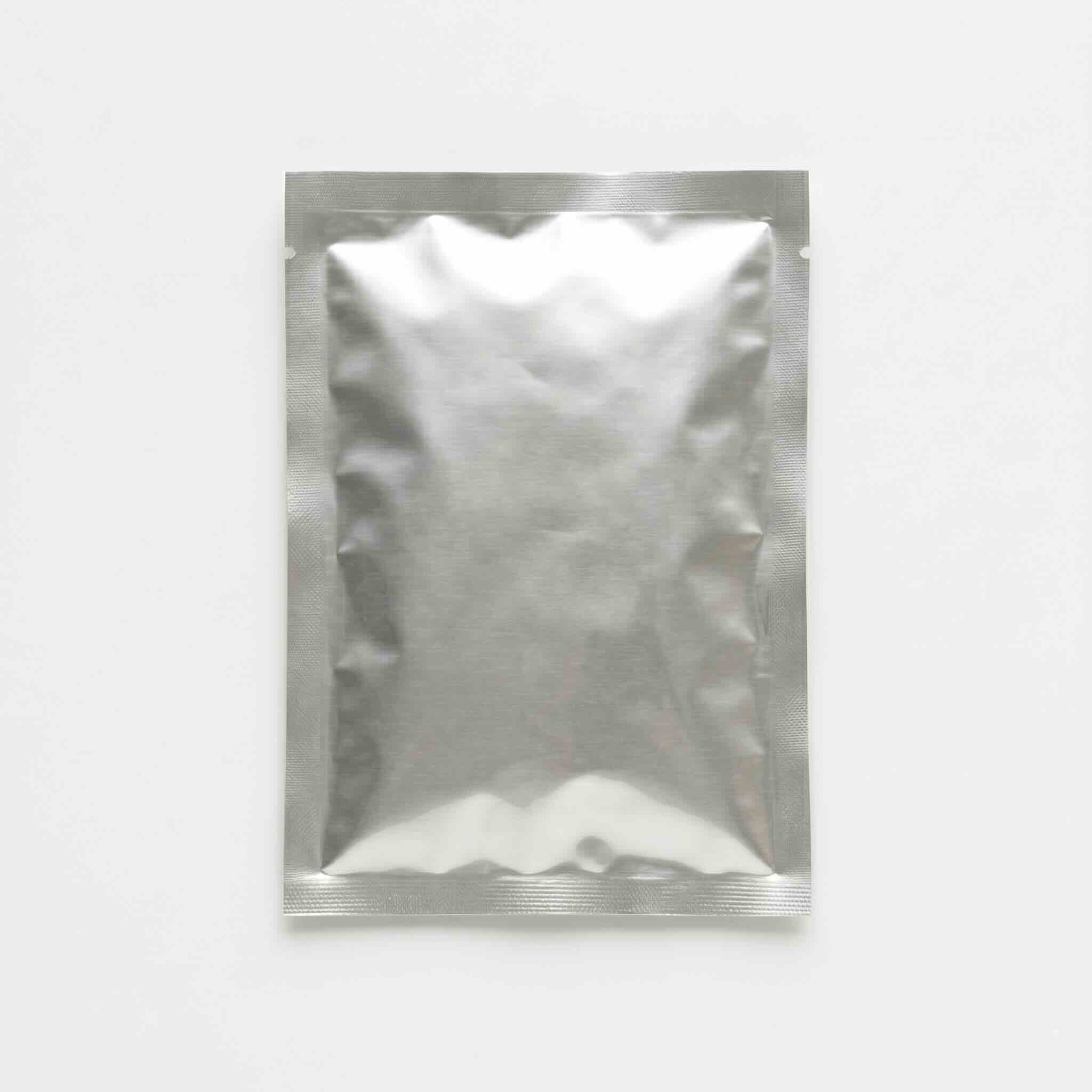
Mylar means barrier. When the industry says "mylar," it means a multi-layer laminate with foil or metallised PET that blocks oxygen, light, and moisture.
Format choice depends on shelf presence and dispensing. Stand up pouch wins for retail visibility. Flat pouches and three-side-seal sachets win for cost and single-use.
The real question is the combination. Choose the material based on your product's freshness needs, then choose the format based on how the customer will use the bag.
The most common confusion in custom packaging conversations is treating "mylar bag" and "stand up pouch" as alternatives. They are not. They describe different decisions on the same product. Mylar is a material. Stand up pouch is a structural format. A single bag can be both, neither, or one but not the other. Once you understand that, the choice gets easier.
This guide explains what mylar actually is, what a stand up pouch is built to do, when each format genuinely outperforms the alternative, and the combinations that work best for specific industries. By the end you will know exactly what to specify when ordering custom mylar bags and stand up pouches, and why most premium retail packaging uses both at the same time.
Mylar packaging exists because of a specific problem the food industry could not solve before the 1960s. Aluminium foil was already in use as a barrier material. It blocked oxygen and light beautifully. It also cracked at fold lines, tore on machinery, would not heat-seal to itself, and could not carry print. A pouch made from pure foil was a structural disaster. The food industry had a barrier with no bag, and a bag with no barrier.
DuPont's BoPET film, introduced in 1952 under the Mylar trademark, solved the structural half of the problem. BoPET is a polyester film that can be biaxially stretched, which gives it dimensional stability across temperature changes, tensile strength comparable to thin metal, and a surface that accepts ink and adhesives. It is also clear, which means anything bonded to its underside is visible. Over the next decade, packaging engineers learned to laminate foil between layers of BoPET, with a heat-seal polyethylene film on the inside. The mylar carried the foil. The foil carried the barrier. The polyethylene let the bag close. Three problems solved by stacking three films into one laminate.
That is the laminate the industry now calls "mylar." It is not a single material. It is a sandwich, and the actual barrier work is done by the metal layer in the middle. The mylar layer is the structural skeleton.
The next evolution came in the 1970s and 1980s with metallisation technology. Vacuum metallisation deposits aluminium onto a polyester film at thicknesses measured in nanometres rather than microns. The visible result looks identical to foil. The barrier is a fraction of foil's performance, but for products with shorter shelf lives, the barrier is sufficient. Metallised PET cut packaging cost dramatically and opened mylar-style packaging to mass-market food categories that could not justify foil pricing.
This is why "mylar packaging" today is two completely different products masquerading under one name. Foil mylar is the original construction, used for products that need genuine 12+ month shelf life with high oxygen sensitivity. Metallised PET mylar is the lower-cost variant, used for products with 6 to 12 month windows where the barrier is "good enough." Most buyers do not know which they are getting. Most suppliers do not volunteer the distinction. The product on the shelf often performs to neither expectation because the brand specified one and got the other.
📌 Key Takeaway
"Mylar" is shorthand for a laminate construction, not a material. The barrier work is done by foil or metallised PET hidden inside. When a supplier quotes "mylar," ask which barrier is in the laminate. The answer changes the product's performance by an order of magnitude.
Most packaging buyers default to mylar because someone in their category uses it. That is a marketing decision, not an engineering one. Whether your product genuinely needs mylar depends on three measurable sensitivities. Score your product on each, and the answer falls out of the math.
Oxygen sensitivity. If your product contains lipids, polyphenols, vitamins, or volatile aromatics, oxygen will degrade them. Coffee, fish oil, nuts, freeze-dried meat, vitamin formulations, antioxidants, and essential oils all sit at the high end. Sugar, salt, dried herbs, and most starches sit at the low end. The threshold is whether oxidation produces detectable changes in flavour, color, or potency within your shelf life target. If yes, you need a mylar-class barrier. If no, you do not.
Moisture sensitivity. If your product is hygroscopic (absorbs water from air), texture changes through humidity exposure, or supports microbial growth at higher water activity, moisture barrier matters. Powdered supplements, freeze-dried foods, jerky, crisp snacks, probiotic capsules, and any dry product with target water activity below 0.6 are moisture-sensitive. Moist products like coffee beans (~10% moisture content) are not, because moisture exchange in either direction matters less for them. Pay attention to what the product needs to keep, not what it needs to keep out.
Light sensitivity. UV light breaks down specific compounds: chlorophyll (greens powders, matcha), carotenoids (turmeric, paprika, beta-carotene), riboflavin (B2), retinol (vitamin A), curcumin, resveratrol, and most polyphenols. If your product contains any of these and ships in retail conditions with shelf or storage light exposure, you need light barrier. Mylar with foil or metallised PET delivers near-zero light transmission. Clear plastic delivers zero light barrier.
Score each sensitivity as low, medium, or high for your product. If two or more are medium-to-high, mylar is the right specification. If only one is high and the others are low, mono-material PE or kraft paper structures may be sufficient and cheaper. If none are high, plain plastic or kraft paper without barrier is genuinely fine, and paying for mylar is wasted budget. The brands that get packaging right run this calculation before they call a supplier. The brands that overspend skip it.
📌 Key Takeaway
Mylar is necessary when two or more of oxygen, moisture, or light sensitivity are high for your product. If only one is high, simpler structures often work. If none are high, mylar is overkill and you are paying for barrier you do not need.
Specific examples make the framework concrete. Specialty coffee scores high on oxygen (lipid oxidation, aroma loss) and high on light (chlorogenic acid breakdown), with low to moderate moisture sensitivity. Two highs means mylar is correct. Premium specialty coffee bags almost always use mylar laminate.
Probiotics score high on moisture (cells die above 30% RH), high on oxygen (anaerobic strains die in air), and moderate on light. Two highs means mylar is correct. Foil mylar specifically, since metallised PET's slower oxygen ingress matters across the 18+ month shelf life probiotics typically claim.
Salted caramel chocolate scores moderate on moisture (sugar bloom and fat bloom risks), low on oxygen (cocoa is more shelf-stable than people assume), and moderate on light. One moderate, one moderate, no high. Mylar is overkill. Foil-laminated paper or metallised PET pouches are sufficient and cheaper.
Greens powders (matcha, spirulina, wheatgrass) score high on light (chlorophyll degradation, very visible color change), moderate on oxygen (some polyphenol oxidation), and high on moisture (caking, microbial growth). Two highs means mylar is correct. This is why every credible greens powder ships in mylar even though buyers assume the packaging is just expensive marketing.
A stand up pouch is a structural format, not a material. It describes a flexible bag with a bottom gusset that expands when filled, allowing the bag to stand upright on a shelf without external support. Three printed panels visible to the customer, plus the gusseted bottom that disappears once the bag stands. The format originated in the 1960s for Capri Sun-style drink pouches and migrated into dry goods packaging through the 1990s and 2000s as flexible barrier laminates improved.
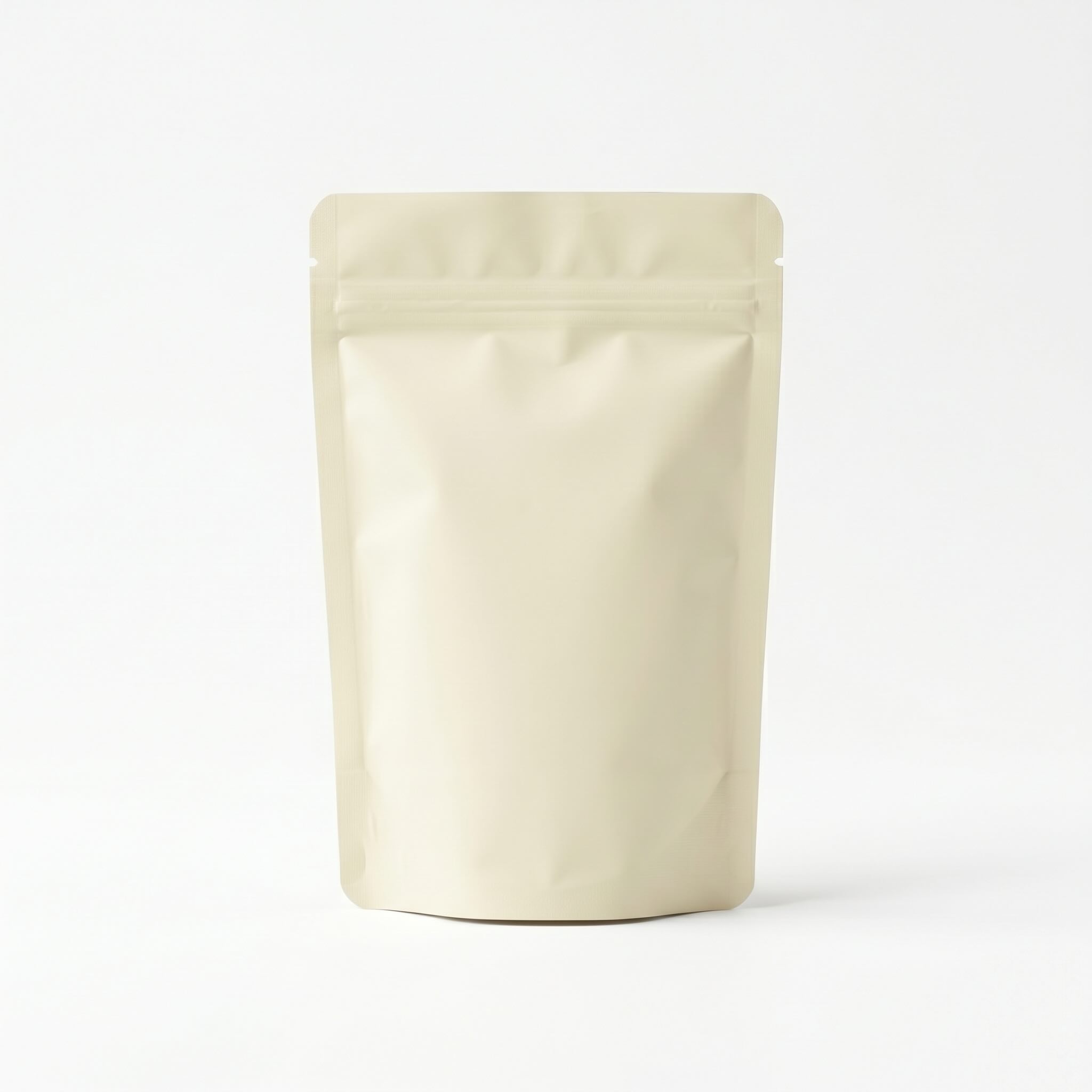
The reason brands choose stand up pouches is shelf presence. A stand up pouch holds vertical against gravity even after handling, transit, and customer browsing. A pillow pouch, three-side-seal sachet, or flat bag collapses on the shelf and loses facing. Facing matters because retail buyers track which products earn shelf space and which pay for it. A bag that stands proud earns its position. A bag that flops looks cheap.
Beyond shelf presence, stand up pouches deliver three more practical advantages. The bottom gusset allows the bag to hold more product per footprint than a flat pouch of the same printed dimensions. The flat front and back panels print cleanly without distortion at the gusset fold. The format pairs naturally with resealable closures, which adds reuse value the customer can feel.
Stand up pouches are now the default format for most premium retail flexible packaging in dry goods. Specific industries where they have effectively replaced rigid alternatives:
Coffee, especially specialty and direct-trade. Stand up pouches replaced cans and rigid containers because they deliver the same barrier (when mylar) at a third of the weight and twice the shelf appeal. Almost every specialty roaster ships stand up pouches in 250g, 340g, or 1kg sizes.
Premium snacks. The 4oz to 16oz retail snack segment is dominated by stand up pouches. Hippeas, Siete, Bare, Lesser Evil, Skinny Pop, and most clean-label challenger brands all use this format because it lets them stand alongside legacy bagged snacks that look stale by comparison.
Pet treats and small-format pet food. 100g to 2kg formats run in stand up pouches because the upright presentation lets premium pet food brands position alongside main-meal SKUs in the same shelf set.
Powdered supplements and protein. Stand up pouches with measuring scoops sealed inside have become the default for greens, electrolytes, collagen, and protein powders in the 200g to 1kg range. The format competes directly with rigid plastic tubs and is winning on weight, shelf appeal, and unit cost.
Liquid pouches with spouts. Stand up pouches with corner or top-centre spouts replaced rigid bottles in specific liquid categories: fruit purees, baby food, smoothies, and increasingly adult beverage formats where flexibility and lightweight transport matter.
Here is where most blogs muddle the comparison. The table below treats them correctly: as two separate decisions you make on the same bag.
| Decision | Mylar Material | Stand Up Pouch Format |
|---|---|---|
| What it controls | Barrier performance | Shelf presentation and dispensing |
| When it is essential | Shelf life >6 months, oxygen-sensitive products | Premium retail, multi-use products, brand-led shelf sets |
| When it is optional | Single-use products, shelf life <3 months | Wholesale formats, bulk packs, contract-fill production |
| Adds to cost | ~30 to 60% over plain plastic | ~10 to 20% over flat pouch of same volume |
| Best for | Coffee, supplements, regulated products, freeze-dried | Premium retail dry goods, snacks, treats, powders |
| Often combined with | Stand up pouch, flat bottom pouch, three-side-seal | Mylar laminate, kraft paper, mono-material PE, compostable structures |
📌 Key Takeaway
The two decisions are independent. A coffee brand needs mylar for barrier and a stand up pouch for shelf presence. They specify both. The bag is a stand up pouch made from mylar laminate. That is the most common premium packaging spec in retail today.
 | ★ Featured Product Custom Mylar Bags & Stand Up PouchesHigh-barrier laminate, 3.5 to 7 mil gauges. Aluminium foil or metallised PET. FDA & EU 10/2011 compliant. BRCGS certified production. Low MOQ from 1,000 units on digital print. View Product → |
Stand up pouch is one format among several, and choosing it should be intentional rather than default. Three alternatives worth knowing.
Flat bottom pouches (block bottom). Box-shaped silhouette with five printable panels instead of three. Stronger shelf presence than stand up pouch for premium positioning. Holds more weight without seal fatigue. Used heavily in specialty coffee 250g to 500g, premium snacks, and pet food 1kg to 5kg. Costs slightly more than stand up pouch but justifies the premium for brand-led retail.
Three-side-seal sachets. The cheapest flexible format. Three sealed edges, one open edge for filling, then sealed shut. No gusset, no stand-up capability. Used for sample sachets, single-serve, stick packs, and impulse formats from 1g to 30g. Cost-efficient for high-volume single-use applications.
Pillow pouches (four-side-seal flow wrap). Flat back with a vertical seal up the back, top and bottom sealed. Used for traditional snack chip bags, bulk packs, and high-speed-fill applications. Cheaper than stand up pouch but lacks shelf presence. Most legacy snack and confectionery brands still ship in pillow pouches.
Each of these can be made from mylar laminate or non-barrier film. The format choice and the material choice are separate.
Here is where the practical guidance lives. Five real packaging combinations brands commonly choose, with the reasoning for each.
Mylar stand up pouch with degassing valve and zipper. Specialty coffee. The mylar handles oxygen, light, and moisture. The valve handles CO2 release. The zipper handles the multi-week consumption window. The stand up format earns shelf space. Most premium roasters ship exactly this spec.
Mylar stand up pouch with measuring scoop and resealable zipper. Powdered supplements, protein, greens. Mylar protects the active compounds. The scoop is sealed inside the bag for clean retail handling. The zipper handles repeat use across the 30 to 60 day consumption cycle. Stand up format competes with rigid tubs.
Mylar three-side-seal sachet. Single-serve supplements, electrolytes, single-use coffee. Mylar protects the product through retail and storage. Sachet format minimises cost per unit at high volume. Stand up format unnecessary because the customer opens and consumes immediately.
Mylar flat bottom pouch with tin tie or zipper. Premium specialty coffee at 250g to 500g, premium granola, artisan tea. Flat bottom delivers stronger shelf presence than stand up pouch. Mylar handles the barrier. Tin tie or zipper handles reseal.
Mono-material PE stand up pouch (no mylar). Sustainable retail packaging where shelf life of 9 to 12 months is sufficient and the brand wants curbside or store-drop-off recyclability. The trade-off is barrier performance is meaningfully lower than mylar but acceptable for the product category. Used by clean-beauty brands, certain snack brands, and sustainability-led pet food.
A clean brief covers both decisions explicitly. When you contact a packaging supplier, separate the material question from the format question.
For the material decision: What is the product's shelf life target? What is its oxygen sensitivity? Light sensitivity? Moisture sensitivity? Does it need food-grade or pharma-grade compliance? What barrier numbers are required? The answers tell you whether you need mylar with foil, mylar with metallised PET, plain mono-material PE, or paper-based structures.
For the format decision: Where is this bag sold and how is it merchandised? Stand up alongside premium SKUs, or stack-packed in bulk? How does the customer use it: single-use or multi-use? What weight or volume? Does it need a closure, a spout, a valve? What does shelf presence look like in your category? The answers tell you stand up pouch, flat bottom, sachet, or pillow pouch.
Most failures come from collapsing the two decisions into one. A buyer who says "I need a stand up pouch" without specifying the material gets the cheapest film the supplier has. A buyer who says "I need mylar" without specifying the format gets a flat sachet that defeats the brand's shelf strategy. Specify both. XWPAK can provide more detailed answers to your specific question, including barrier test data and format samples for direct comparison. Get a quote with the spec details above and the recommendation will match your actual requirement, not the supplier's stock options.
No. Mylar is a material. Stand up pouch is a structural format. A stand up pouch can be made from mylar laminate, plain plastic, kraft paper, or mono-material PE. Most premium retail packaging combines both, using mylar for barrier and stand up pouch for shelf presence.
Both. Specialty coffee almost always uses a stand up pouch (or flat bottom pouch) made from mylar laminate, with a degassing valve and resealable zipper. The mylar handles oxygen, light, and moisture barrier. The stand up format handles shelf presence. Specifying one without the other compromises the product.
Yes. Stand up pouches can be made from mono-material polyethylene (recyclable), kraft paper with PLA lining (compostable), PCR film, or plain non-barrier plastic. Each delivers different barrier performance and recyclability profile. Choose based on your product's shelf life needs and the brand's sustainability commitments.
Mylar laminate adds approximately 30 to 60 percent over plain plastic film cost. The premium pays back through extended shelf life, reduced product waste, and retail buyer requirements that mandate barrier packaging for specific product categories.
Use sachets for single-use products from 1g to 30g, sample formats, and high-volume impulse purchases where shelf presence is less critical than unit cost. Use stand up pouches for retail SKUs above 50g where the bag is multi-use, brand-positioned, and needs to compete visually on shelf.
Specifying mylar bags or stand up pouches for your product?
XWPAK can provide more detailed answers to your specific question. Send us your product type, shelf-life target, and SKU details. We will recommend the right material and format combination, with sample bags and full compliance documentation.
Get A Quote