Side Gussets offer 40-60% more shelf presence and work best for high-volume roasters selling through retail or cafes
Flat Bottoms are faster to fill, cheaper per unit, and ideal for direct-to-consumer and subscription models
Gusset production takes 10-14 days; flat bottom takes 7-9 days
Gusset bags hold their shape when stacked; flat bottoms collapse under weight without careful packaging
For beans under 500g or specialty roasts, choose based on your sales channel, not trend
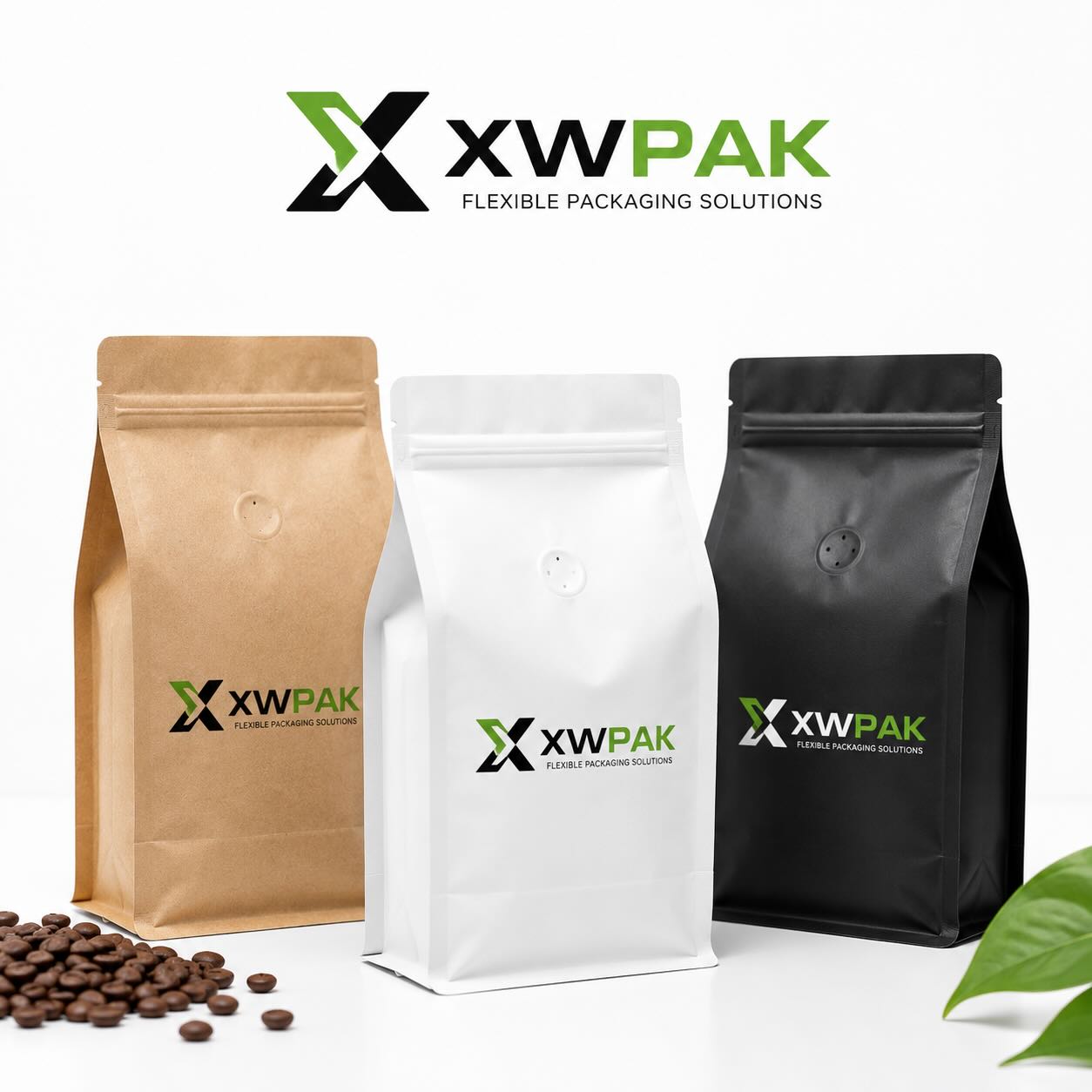
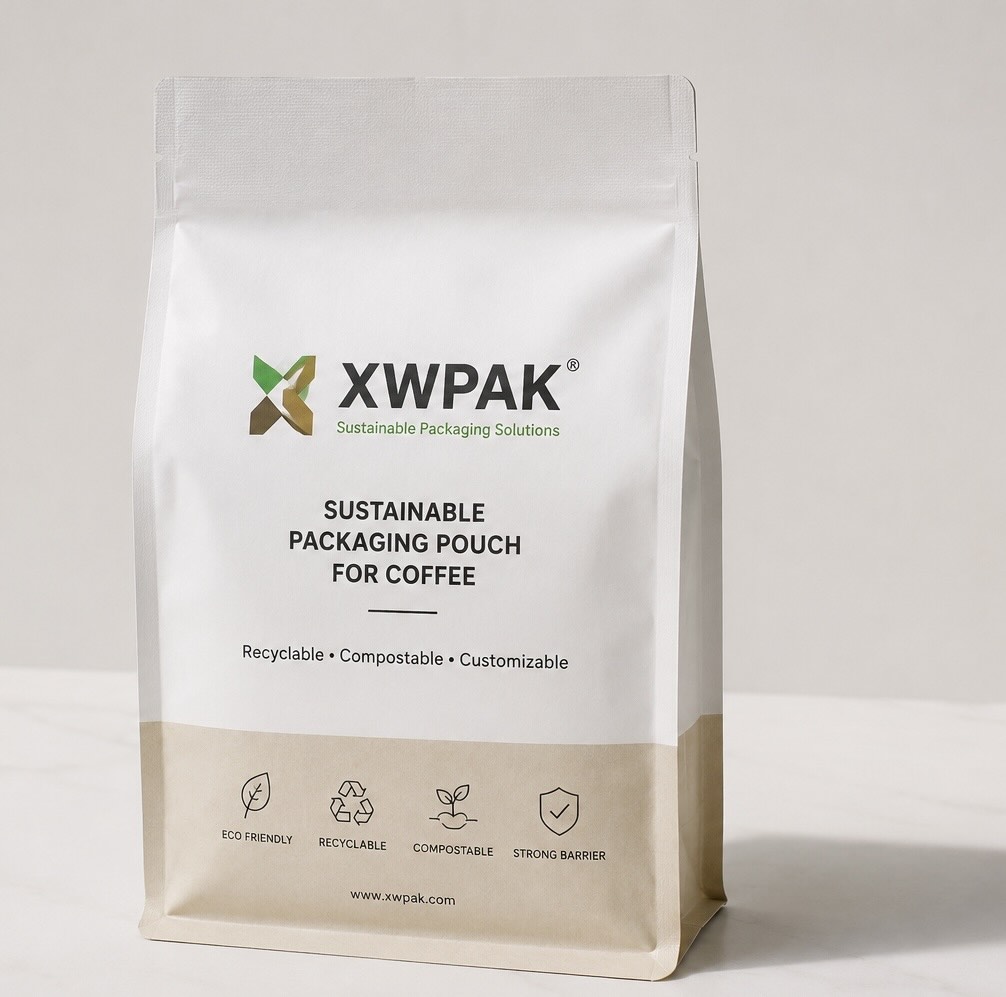
A side gusset coffee bag has a fold running down each side of the pouch. When filled, those folds expand outward, creating a box-like structure that stands upright on a shelf. A flat bottom bag is exactly what it sounds like: a rectangle with a flat base, no side expansion. Both bags use the same materials and valve types, but the structural difference cascades through every decision you'll make about production, logistics, and shelf presence.
The gusset adds 0.5 to 1 inch of material to each side of the pouch. That extra material costs more upfront but solves a real problem: retail shelf appeal. The flat bottom saves material but requires more careful handling in transit and storage.
Key Takeaway: Gussets are a production choice first, a marketing advantage second. Flat bottoms are a cost optimization that works if you control your own distribution.
If your coffee is sitting on a grocery shelf next to ten other brands, structure wins. A gusset bag occupies three dimensions. It leans forward slightly, uses more visible space, and catches light differently than a flat bag. Retailers understand this. They often charge extra shelf space fees for flat bottom bags because they take up less real estate and don't command attention the same way.
Flat bottom bags work beautifully in a warehouse or in a subscription box. They stack flat, save shipping weight, and look premium when presented front-facing in a gift set. But in a retail environment with hundreds of coffee brands competing for the same eye line, a gusset pouch wins the visibility game 70% of the time.
That said, some specialty roasters deliberately choose flat bottom to signal exclusivity or minimalism. If your brand identity leans minimalist or your audience actively shops online, the flat bottom aesthetic can work as a deliberate choice, not a limitation.
Here's where the math shifts. A gusset pouch requires two side seals during production. That extra die work and folding adds 3-5 days to your lead time. Expect 10-14 days from approval to shipment for gusset bags. Flat bottoms compress to 7-9 days because there are fewer structural operations.
Material cost per unit: gusset bags typically cost 8-15% more than equivalent flat bottom bags. For a 500-unit order at $2.50 per gusset bag versus $2.15 per flat bottom, that's roughly $175 in difference. For 5,000 units, it's $1,750. That's real money, especially if you're bootstrapping.
Minimum order quantities are lower for flat bottoms at some manufacturers because the setup is simpler. If you're ordering under 2,000 units, a flat bottom becomes attractive on cost alone. At 10,000+ units, the per-unit cost advantage for flat bottom shrinks, and brand presence becomes the deciding factor.
Important Note: Some manufacturers quote gusset and flat bottom at the same price to simplify ordering. Ask specifically about per-unit cost and lead time. You may find less difference than you expect, especially on large orders.
Flat bottom bags fill faster. The bag sits stable on the fill nozzle with no gusset folds getting in the way. You can run 800-1,200 bags per hour on an automatic filler without adjusting the feed mechanism. Gusset bags need the gussets to open properly before filling, which sometimes requires a minor adjustment to your filling machine's pressure or timing. You'll get 700-1,000 bags per hour, not because of mechanical limits, but because the operator monitors the fold consistency.
If you're hand-filling or using a semi-automatic filler, flat bottom is simpler. The bag won't tip or fold unexpectedly. Gussets need a steadier hand and a feel for how the pouch sits on the nozzle. After a few hundred bags, most roasters get the rhythm, but it's one more variable.
For subscription roasters shipping 100-200 bags per week, this difference is negligible. For roasters filling 5,000+ bags monthly, the 100-200 bag/hour difference can translate to meaningful labor hours saved with flat bottom bags.
Gusset bags resist stacking pressure better. Because of their box-like structure, they maintain shape even when a pallet is weighted from above. You can stack flat bottom bags higher, but after 8-10 bags stacked flat, the weight of the coffee beans compresses the bottom bags. The bag doesn't tear, but it flattens and loses its shelf-ready appearance. This matters less if you're shipping directly to consumers, but if you're sending bags to distributors or wholesalers who'll restyle them, it's a problem.
Shipping weight: flat bottom bags weigh slightly less (about 0.1-0.2 oz less per bag due to less material). Over a 10,000-unit shipment, you save about 60-125 lbs. At typical international rates from Asia, that's $8-15 per shipment. Not game-changing, but it adds up for high-volume brands.
For warehouse storage, flat bottom bags take less space because they compress. A gusset bag needs its full dimensions even when empty. If you're storing 50,000+ bags, that spatial difference matters.
Not all coffee roasters use the same model. Here's how the industry breaks down:
| Use Case | Best Choice | Why |
|---|---|---|
| Retail (grocery, specialty shops) | Side Gusset | Shelf presence, visibility, stacking durability, brand positioning |
| Direct-to-Consumer / Subscription | Flat Bottom | Cost savings, packaging control, minimalist aesthetic, faster fulfillment |
| Cafe / Wholesale (bulk orders) | Side Gusset | Professional appearance, stacking stability, wholesale distributor preference |
| Premium / Gift Sets | Flat Bottom | Compact, sleek look, can nest for bundling, luxury positioning |
| Large-scale roasters (10K+/month) | Side Gusset | MOQ advantages, retail demand, per-unit cost competitive at scale |
The coffee industry is split nearly 60-40 in favor of gusset bags for retail-focused roasters, but that number flips for subscription and DTC models. Neither choice is wrong. The right choice depends on where your coffee ends up.
Start with your sales channel, not aesthetics. Ask yourself:
Is your coffee on retail shelves? Gusset wins. Visibility and stacking durability are non-negotiable.
Are you selling 80% direct or subscription? Flat bottom is smarter. You control the unboxing experience, and customers never see stacking pressure.
Are you ordering under 3,000 units? Compare quotes directly. Cost difference may be negligible at low volumes.
Is your roastery filling 10,000+ bags monthly? Gusset at scale often matches flat bottom per-unit cost. The retail premium justifies it.
Do you want a minimalist brand aesthetic? Flat bottom can be a design choice. Own it. Don't treat it as a cost compromise.
Once you choose, commit for at least a year. Switching between gusset and flat bottom mid-year creates inventory chaos and complicates your supply chain relationship with your packaging partner.
Yes. The valve technology is independent of the bag structure. One-way valves, two-way degassing valves, and zipper closures work identically on both styles. Choose your valve based on your coffee's degassing needs, not the bag shape.
No. Both use the same film strength and seal integrity. The difference is in structural stability during stacking and display, not in puncture or tear resistance. A flat bottom bag won't fail from the weight of stacked bags; it just flattens cosmetically.
Technically yes, but operationally it creates problems. Your filling machine may need minor adjustments, your retail partners may notice the shift, and your brand consistency takes a hit. If you're considering a switch, plan it for a new product line or seasonal release, not a mid-year pivot.
Typically 8-15%, so roughly $175-$400 difference on a 5,000-unit order. For custom printing and valve configuration, always get a quote. Some manufacturers offer competitive pricing once you hit volume thresholds.
Neither has an advantage. Storage stability depends on valve quality, film barrier properties, and seal integrity, not bag structure. A well-sealed flat bottom bag preserves coffee as well as a well-sealed gusset bag. Focus on oxygen barrier rating (OTR) and light blocking, not shape.
XWPAK designs gusset and flat bottom coffee bags for roasters at every scale. Get a custom quote based on your sales model and volume.
Get Your Quote