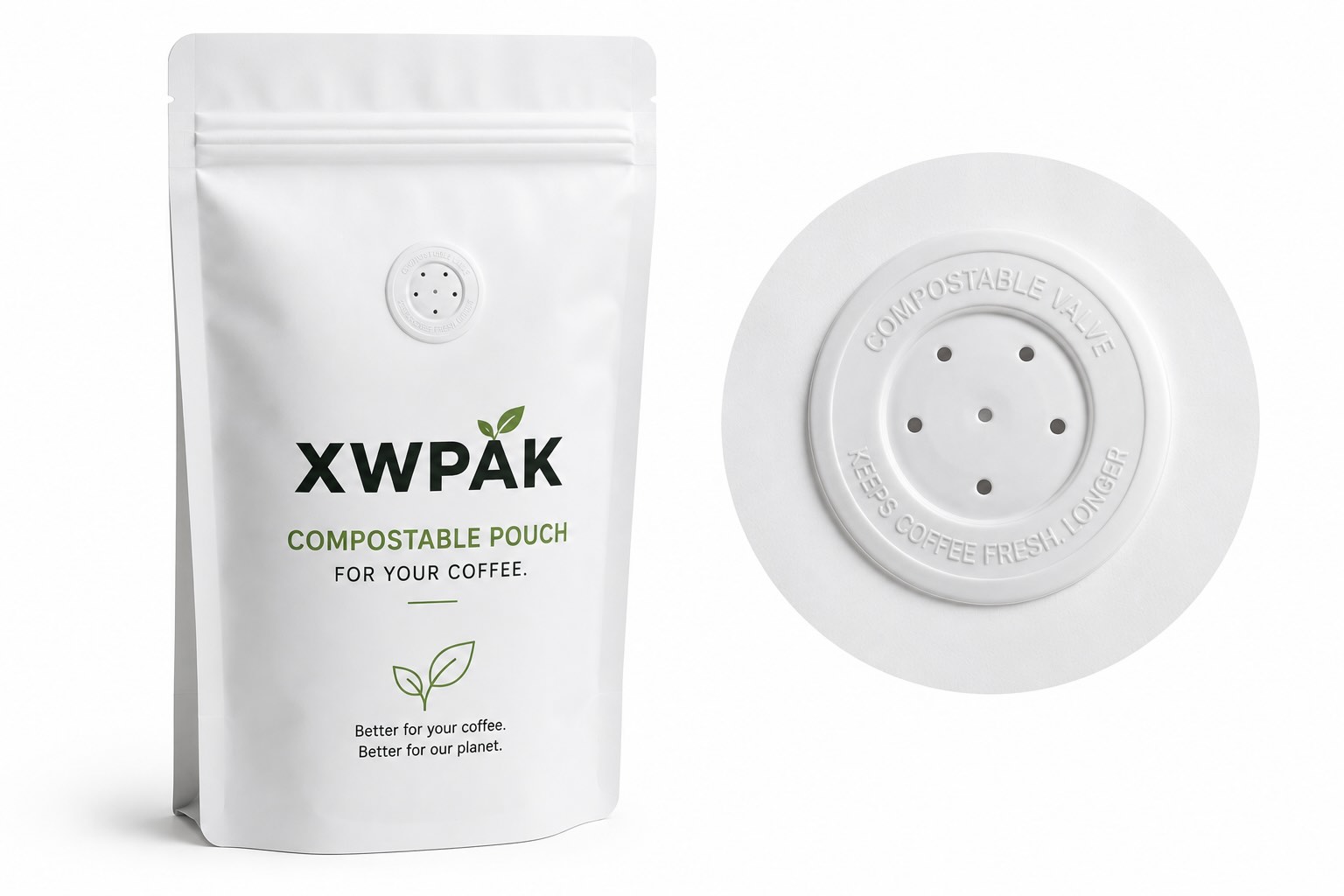
One-way valves let CO2 escape while blocking oxygen, extending shelf life by 4-6 weeks vs sealed bags
Compostable plastic laminate + one-way valve is the industry standard for specialty roasters targeting premium retail
Aluminum barrier layers are unnecessary for bags under 500g or under 6 months shelf life
Gusset pouches with valves dominate retail; flat bottoms work for DTC only if valves are not critical to your roast profile
Valve placement, material selection, and closure type (zipper vs tin-tie) must align to avoid premature sealing or degassing failure
Coffee releases CO2 for 5-14 days after roasting. Sealed bags trap that gas, building pressure and bursting seals. A one-way valve solves this: gas escapes, but a spring-loaded flapper prevents air from flowing back in. The result is a bag that stays sealed while your coffee degasses naturally.
This is not optional for fresh-roasted beans. Within 48 hours of roast, pressure builds inside a sealed bag. Without a valve, you'll see puffing, weak seals, or customers opening bags that burst. Every specialty roaster selling through retail or wholesale needs a degassing valve on bags arriving within 5 days of roast.
The valve itself is a one-way mechanical device. Most commercial valves use a spring-loaded design: internal pressure pushes a flapper open, gas exits, then the flapper closes automatically when internal pressure drops. Cost per unit is 2-5 cents, but the difference in perceived quality and customer satisfaction is measurable.
Key Takeaway: One-way valves are mandatory for fresh-roasted coffee in retail. They're not a premium feature; they're a failure-prevention mechanism. Bags without valves will burst or leak within 3-7 days of roast.
The material you choose determines how long your coffee stays fresh. Here's the industry breakdown:
Compostable Plastic Laminated
This is the gold standard for premium roasters. Compostable PLA film (polylactic acid) laminated with kraft paper creates a barrier that blocks light and oxygen while remaining industrially compostable. Cost is 15-25% higher than conventional plastic, but roasters targeting specialty retail and eco-conscious consumers see this as table stakes. Shelf life is 8-12 weeks with a one-way valve. The compostable plastic layer provides oxygen barrier comparable to standard PE, while the kraft exterior delivers a premium tactile experience. XWPAK and competitors like Mondi are pushing this as the standard for 2026-forward roasters.
Conventional Plastic (PE or LLDPE)
Recyclable polyethylene or linear low-density polyethylene. This is the workhorse material. Cost is baseline, oxygen barrier is solid (OTR ~2-4 cc/m²/day depending on thickness), and shelf life is 8-10 weeks with a valve. White PE is standard for custom printing; clear PE is used when bean visibility is a selling point. Most commodity roasters and subscription brands use this. It's not a brand liability, but it signals "functional" not "premium." If your roaster is under 2 years old or your wholesale price is under $15/bag, conventional plastic is the right call.
Kraft Laminated (Conventional or PCR)
Kraft paper laminated with plastic film. The kraft exterior gives a natural, craft feel. PCR (post-consumer recycled) kraft is the sustainable version. Oxygen barrier depends on the plastic layer underneath; kraft alone is too porous. This works for direct-to-consumer brands and subscription boxes where customers don't see the bag on a retail shelf competing for attention. Shelf life is 6-9 weeks with a valve because the kraft adds minimal barrier beyond the inner film. Cost is mid-range, and the aesthetic appeal is high for gift sets.
Aluminum Barrier (Unnecessary for Most Roasters)
Aluminum-foil-laminated film provides the absolute best oxygen barrier: OTR under 0.5 cc/m²/day. Shelf life extends to 12-18 months. This sounds great until you do the math: aluminum costs 30-40% more per unit, and your coffee rarely needs 18 months. Unless you're shipping to markets 10+ time zones away or storing inventory for 6+ months before sale, aluminum is overkill. Reserve aluminum for whole-bean bags destined for international distribution or specialty items stored in warehouses.
Industry Standard Practice: Compostable plastic laminate + one-way valve = the benchmark for specialty roasters targeting premium retail. It signals quality, sustainability, and freshness. Conventional plastic is standard for subscription and DTC. Aluminum is rare unless you have a specific supply-chain reason (extended storage, long-haul export).
Oxygen barrier is measured in OTR (oxygen transmission rate): how many cubic centimeters of oxygen pass through a square meter of film per day. Lower is better.
| Material | OTR (cc/m²/day) | Shelf Life with Valve | Best Use |
|---|---|---|---|
| Conventional PE | 2-4 | 8-10 weeks | Subscription, DTC, commodity roasters |
| Compostable Plastic | 2-3 | 8-12 weeks | Premium retail, eco-conscious brands |
| Kraft Laminate | 5-8 | 6-9 weeks | Gift sets, DTC minimalist brands |
| Aluminum Foil | 0.2-0.5 | 12-18 months | Long-haul export, warehoused inventory |
Here's the real talk: unless your coffee is sitting in a warehouse for 6+ months or traveling to Asia/Europe with 90+ days in transit, aluminum is a cost sink. Most roasters ship fresh-roasted within 2 weeks. Conventional or compostable plastic is sufficient. Aluminum works for specific supply chains, not for standard retail or subscription models.
Your closure choice affects how long the valve stays useful.
Press-lock Zipper
The industry standard. Easy to open and reseal, durable for 10+ open-close cycles. A well-designed zipper maintains a hermetic seal after closing. Cost is mid-range. Most retail and subscription bags use this. Works well with one-way valves because the zipper seal isolates the bag once the customer stops opening it. Tear zippers are cheaper but single-use; press-lock zippers justify the cost for repeat customers.
Tin-Tie Closure
A folded metal strip at the top. The customer folds the bag down and wraps the tie around to seal. Popular for wholesale and bulk roasters. Doesn't re-seal as effectively as a zipper, but it's economical and gives a traditional, craft appearance. With a one-way valve, tin-tie is slightly less ideal because the customer's ability to maintain a tight seal depends on their technique. But most customers manage fine. Tin-tie is 3-5 cents cheaper than zipper.
Slider Zipper
A compromise: low-profile slider mechanism on a press-lock track. Premium feel, easier to open than standard zippers, slightly higher cost. Popular for specialty brands targeting gift market. Works identically to press-lock zipper with one-way valves.
No Zipper
Sealed bags with no customer reopening. Used for wholesale bulk orders or one-time-use packaging. Once sealed at your facility, the bag stays sealed in the customer's warehouse. One-way valve still degasses, but the customer never opens the bag. This is rare but necessary for certain B2B logistics.
Standard sizes for valve-equipped bags are 8oz, 12oz, and 1lb. Smaller bags (under 5oz) rarely need valves because CO2 volume is minimal. Larger bags (2-5lb) benefit from valves even more because CO2 buildup is significant.
Minimum order quantities for custom valve bags are typically 3,000-5,000 units. At 3,000 units, per-unit cost is highest. At 5,000+, economies of scale kick in and per-unit cost drops 8-12%. If you're testing a new roast profile or seasonal offering, 3,000 is the sweet spot for learning without over-committing. If you have consistent demand, 5,000+ is more efficient.
Lead time for custom valve bags is 10-14 days. This is longer than non-valve bags because valve installation requires precision. Plan accordingly if you're shipping fresh-roasted; a 2-week lead time means you need to order based on anticipated demand, not reactive sales.
Spec Recommendation: Start with compostable plastic laminate, press-lock zipper, 8oz or 1lb size, 5,000 unit MOQ. This hits the industry standard for specialty roasters and gives you the best cost-per-unit at functional scale.
Foil stamping (hot-stamp metallic ink) is a visual upgrade that works well with compostable and conventional plastic laminates. Gold or silver foil adds perceived value and catches light on retail shelves. Cost is 1-3 cents per unit. If your wholesale price is $12+/bag, foil is worth it. If your price is under $10/bag, skip it.
Glossy finish adds sheen and improves color saturation for custom printing. Matte finishes are trendy for minimalist brands. Neither affects the valve or barrier performance. This is pure aesthetics. Choose based on your brand positioning, not technical function.
Surface effects are low-stakes customizations. If your roaster competes on visual shelf appeal, they're worth the small cost. If you're selling DTC subscription and customers never see the bag on a shelf, skip them and invest in better copy or pricing.
If you're selling primarily through retail (grocery, specialty cafes, boutique roasters):
Material: Compostable plastic laminate
Barrier: Standard plastic (OTR 2-3) is sufficient
Closure: Press-lock zipper
Size: 8oz or 1lb
Extras: Foil stamp (if your price supports it)
MOQ: 5,000 units
If you're selling direct-to-consumer or subscription:
Material: Conventional PE or compostable plastic (your choice)
Barrier: Standard plastic is fine; aluminum is overkill
Closure: Press-lock or tin-tie (whatever matches your brand)
Size: 8oz (sample/gift), 1lb (standard), 5lb (bulk)
Extras: Skip foil stamp unless your unit margin is high
MOQ: 3,000-5,000 (testing) or 10,000+ (scaling)
If you're a high-volume wholesale roaster (10,000+ bags/month):
Material: Conventional PE (cost-optimized)
Barrier: Standard plastic
Closure: Tin-tie (cheaper, familiar to customers)
Size: 1lb or custom (whatever your buyers prefer)
Extras: None
MOQ: 10,000+ (economics demand it)
The coffee industry has narrowed these choices significantly. If you're new to valve bags, your safest bet is compostable plastic + press-lock zipper + 5,000 MOQ. You can optimize from there based on actual customer feedback and margin targets.
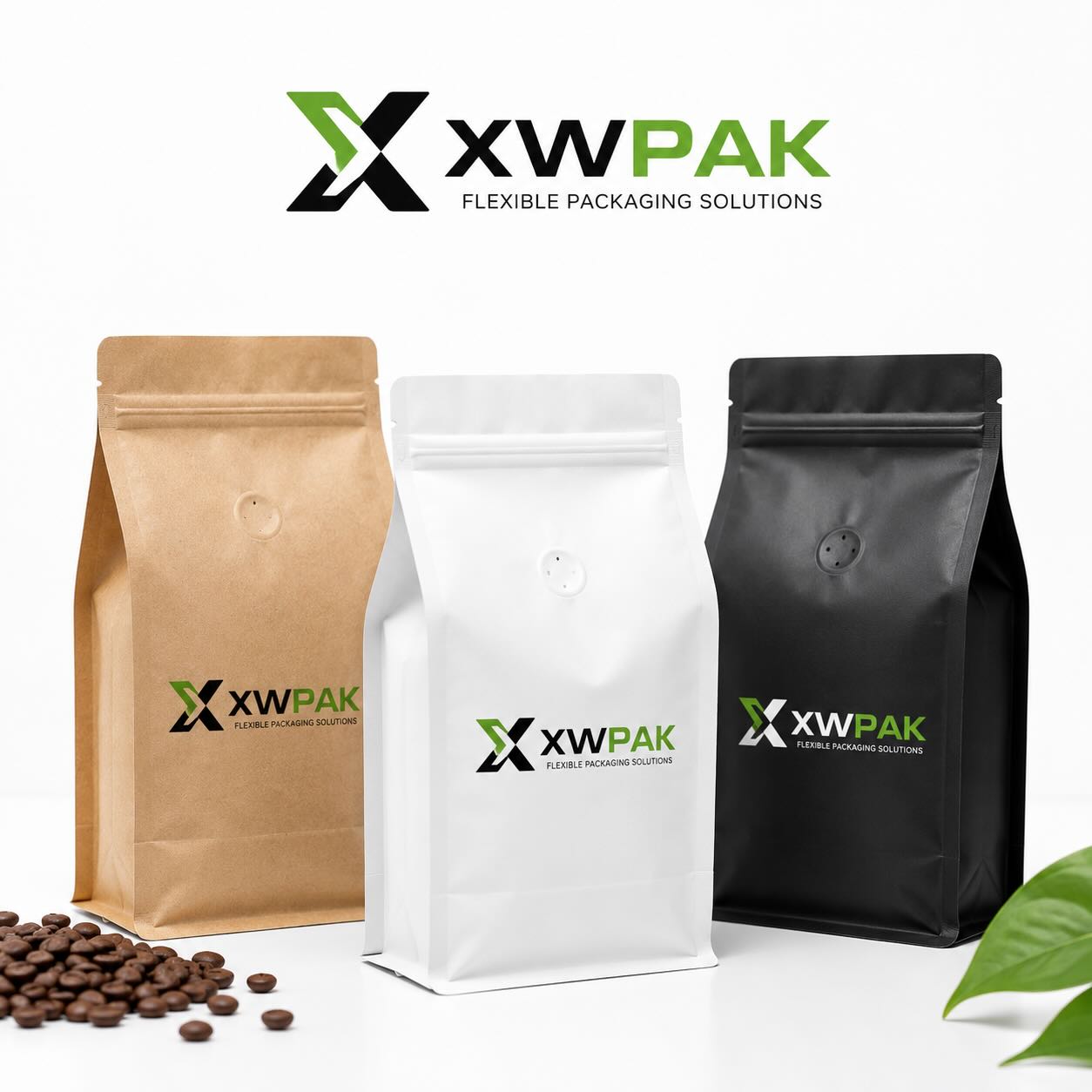
Valve placement is critical. The valve sits on the side of a gusset pouch, typically 1-2 inches below the top seal, slightly offset from center. This placement ensures that pressure inside the bag pushes directly against the valve flapper, allowing maximum gas escape while the valve sits in a stable position.
If the valve is placed too high (near the seal), it may interfere with zipper function or seal integrity. Too low, and the flapper won't catch all the pressure. Professional manufacturers test valve placement during prototype phases to ensure the bag degasses completely within 24-48 hours of roast.
After the customer opens the bag and reseals it, the valve plays no further role. The zipper becomes the barrier. A poor zipper seal means oxygen enters between reseals, degrading freshness faster than the valve can help. This is why closure quality matters as much as valve quality.
Watch this short on valve mechanics if you want to see the physics in action.
Yes, but it's uncommon. Flat bottom bags are usually used for direct-to-consumer, where fresh-roasted shipping timing is less critical. Gusset pouches dominate the valve market because retail buyers expect them. If you're doing flat bottom with a valve, ensure your filling machine can handle the bag structure without pinching the valve during the seal process.
About 24-48 hours after roast, once CO2 release slows significantly. The valve remains mechanically intact indefinitely, but its primary function (pressure relief) is done within the first 2 days. After that, it's just a component of the bag. It doesn't "wear out" from normal handling.
No. If your coffee reaches the customer 4+ weeks post-roast, CO2 has already dissipated naturally. A valve becomes unnecessary and adds cost. Use a sealed bag without a valve. Valves are for fresh-roasted (under 5 days post-roast) or retail scenarios where you can't control the shipping timeline.
The valve mechanism is the same, but CO2 volume scales differently. A 5lb bag produces significantly more CO2 and may need a valve with a larger opening to keep up with pressure release. Always specify bag size when ordering valved bags. Manufacturers adjust valve specifications per size.
If your roaster is positioned as premium or eco-conscious, yes. It justifies a price increase and resonates with specialty retail buyers. If you're competing on volume or price, conventional PE is fine. The barrier performance is similar; the difference is brand positioning and end-of-life disposal narrative.
XWPAK manufactures gusset pouches with one-way valves in compostable, conventional, and recycled materials. Get a custom quote based on your roast profile and distribution model.
Get Your Quote