No eco-friendly coffee pouch material matches the oxygen barrier of a plain foil laminate. Not compostable film, not recyclable mono-PE, not kraft paper. That gap is fixed, and every roaster picking a "green" material is choosing which piece of shelf life to give up for it, whether the supplier says that part out loud or not. The question worth asking is not which material sounds most sustainable. It is which compromise your turnover speed can actually absorb.
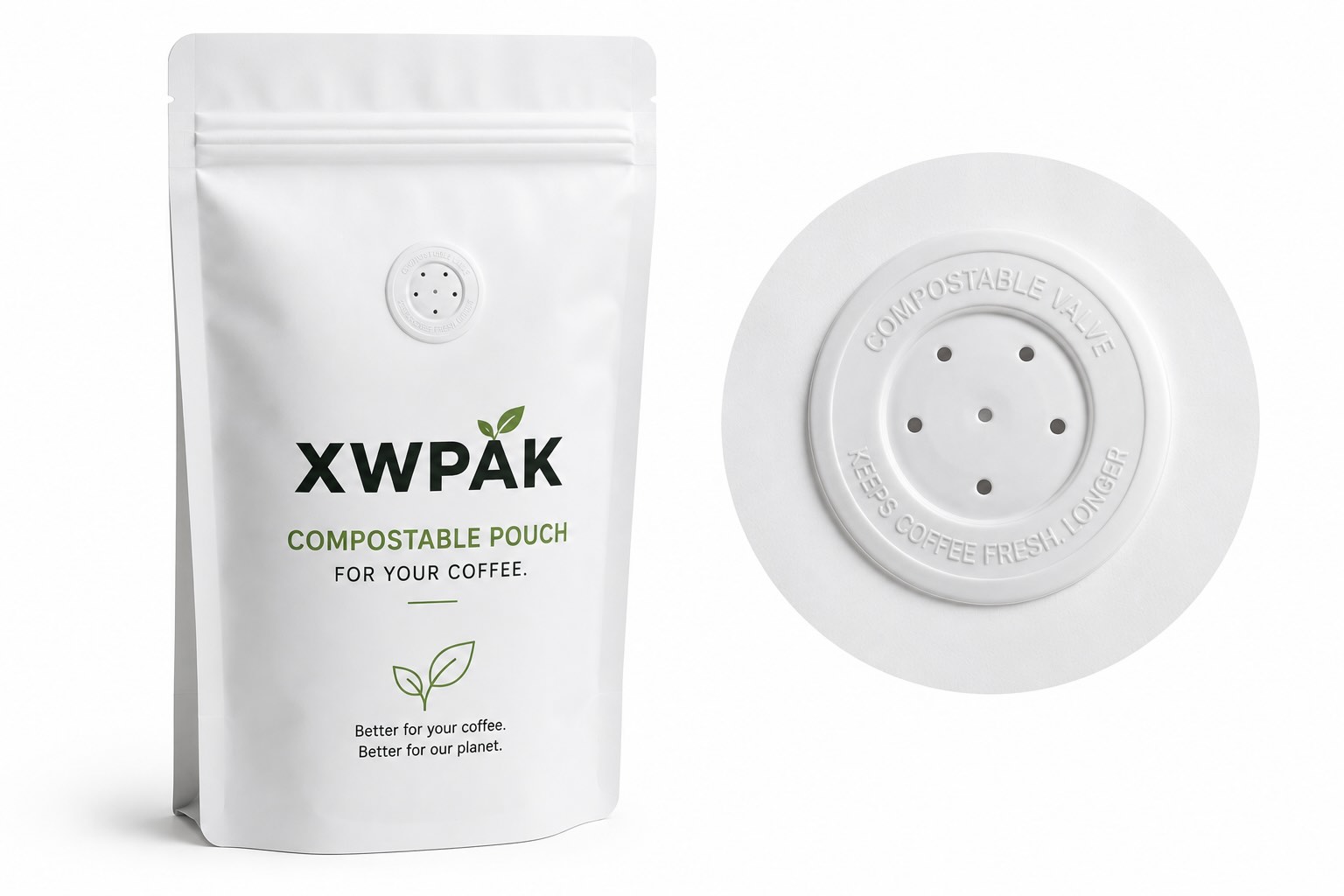
Compostable film gives up the most barrier performance of the three options, and it also comes in two grades most roasters never think to check. Industrial compostable certification, such as BPI or TUV Austria OK Compost, only means the film breaks down in a commercial composting facility running sustained high heat, not in a backyard bin. Home compostable is the stricter of the two standards, since it has to work without industrial conditions. A bag labeled "compostable" without naming which standard it meets is a claim with a gap in it, and that gap shows up later as a customer complaint, not at the point of sale. Compostable pouches run thinner barrier layers than a conventional laminate, so beans hit their peak-freshness ceiling sooner than they would in foil.
Recyclable mono-PE is the strongest performer of the three eco options, even though it rarely gets marketed as the "greenest" one. Built from a single polymer family, usually polyethylene or polypropylene, the whole pouch runs through standard plastic recycling streams instead of getting rejected for mixed layers a facility cannot separate. Recyclable pouches built this way can hit oxygen barrier numbers close to a conventional multi-layer film when the structure is engineered right, well ahead of most compostable alternatives, though still short of what full foil delivers over a long shelf life.
The paper layer on a kraft bag is doing zero barrier work. All of it happens in a thin liner glued behind the paper, usually PE or a bio-based film, that nobody sees when they pick the bag up. Every functional kraft paper coffee bag depends on that hidden liner to keep oxygen and moisture out, not on the paper itself. Roasters often assume the kraft look means less plastic in the structure, but the liner is usually carrying the exact same barrier job a conventional film would, just out of sight. What kraft paper actually changes is shelf perception and, in some builds, total plastic volume, not whether a barrier layer exists at all.
A common misconception is that a certified film automatically means the finished pouch carries the same certification. Adding a zipper, a degassing valve, or certain inks can change whether the assembled bag still qualifies under the original certification, since some of those components are made from different materials than the base film. It is worth asking a supplier directly whether the certification applies to the raw film, the finished structure, or both, because those are not always the same answer. For a deeper comparison of certifications and cost structures across material types, this guide from Hearted Blessings is a useful resource alongside the specifications a manufacturer provides directly.
Whatever sustainable material a roaster chooses, oxygen transmission rate and water vapor transmission rate still determine how long beans stay fresh, exactly as they would with a conventional laminate. Sustainable films generally cannot match the near-zero oxygen transmission of a full foil laminate, which is a genuine tradeoff rather than a solvable gap. The practical question for most roasters is not which material is greenest in isolation, but which sustainable option gets close enough to the barrier performance their actual turnover speed requires. A roaster moving inventory in four to six weeks has far more flexibility here than one holding stock for six months.
Sustainable films typically cost more per unit than conventional multi-layer laminates, and minimum order quantities are often higher because these materials are produced in smaller runs by fewer suppliers. Roasters budgeting for a switch to eco-friendly packaging should ask about both the per-unit cost difference and the minimum volume required to lock in that pricing, since a small roaster ordering below a supplier's efficient production threshold can end up paying a premium that erases much of the intended cost benefit of a larger switch later on.
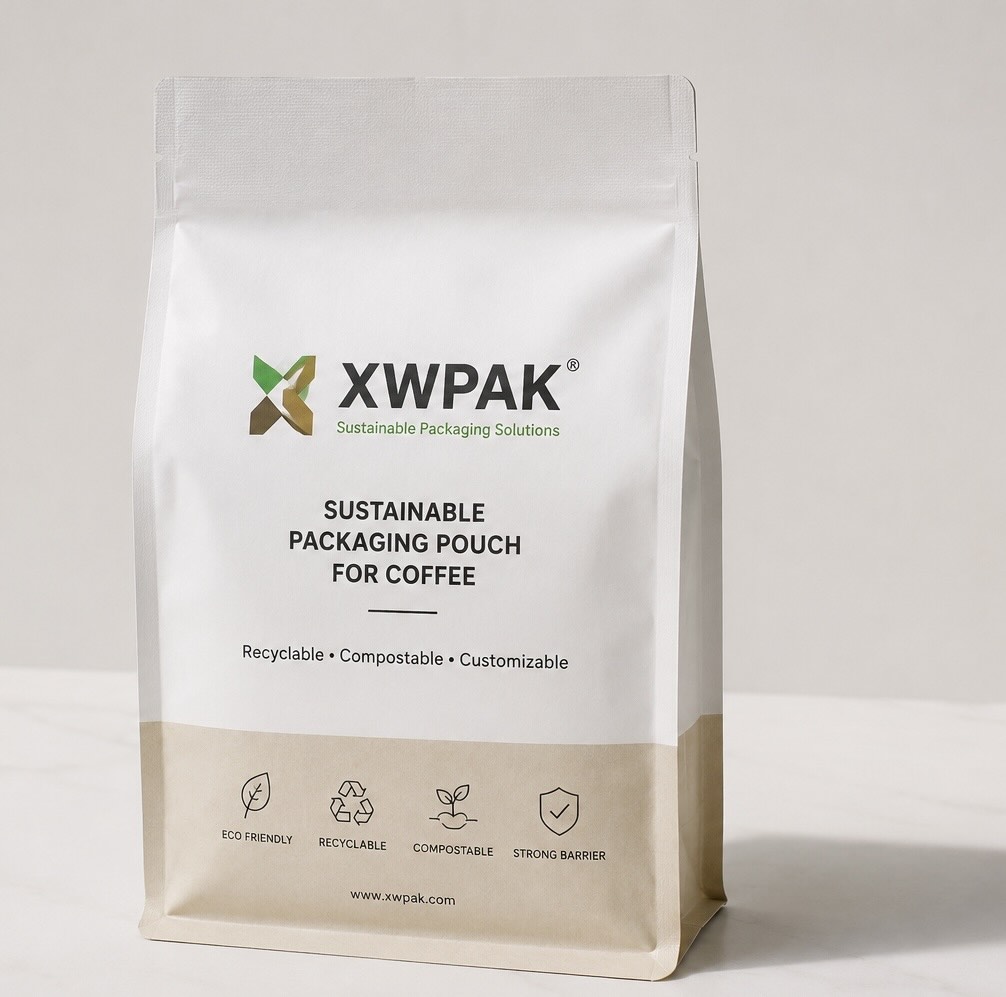
The right choice among compostable, recyclable, and kraft paper structures depends on inventory turnover, storage conditions, and how much barrier compromise a brand can tolerate before customers notice a difference in the cup. XWPAK works through this evaluation with roasters directly, testing barrier performance against the specific shelf life a product needs rather than defaulting to whichever material sounds best in marketing copy. Reviewing full coffee packaging options and sustainable packaging structures side by side before committing to a supplier is the step that prevents a costly reformulation down the line.