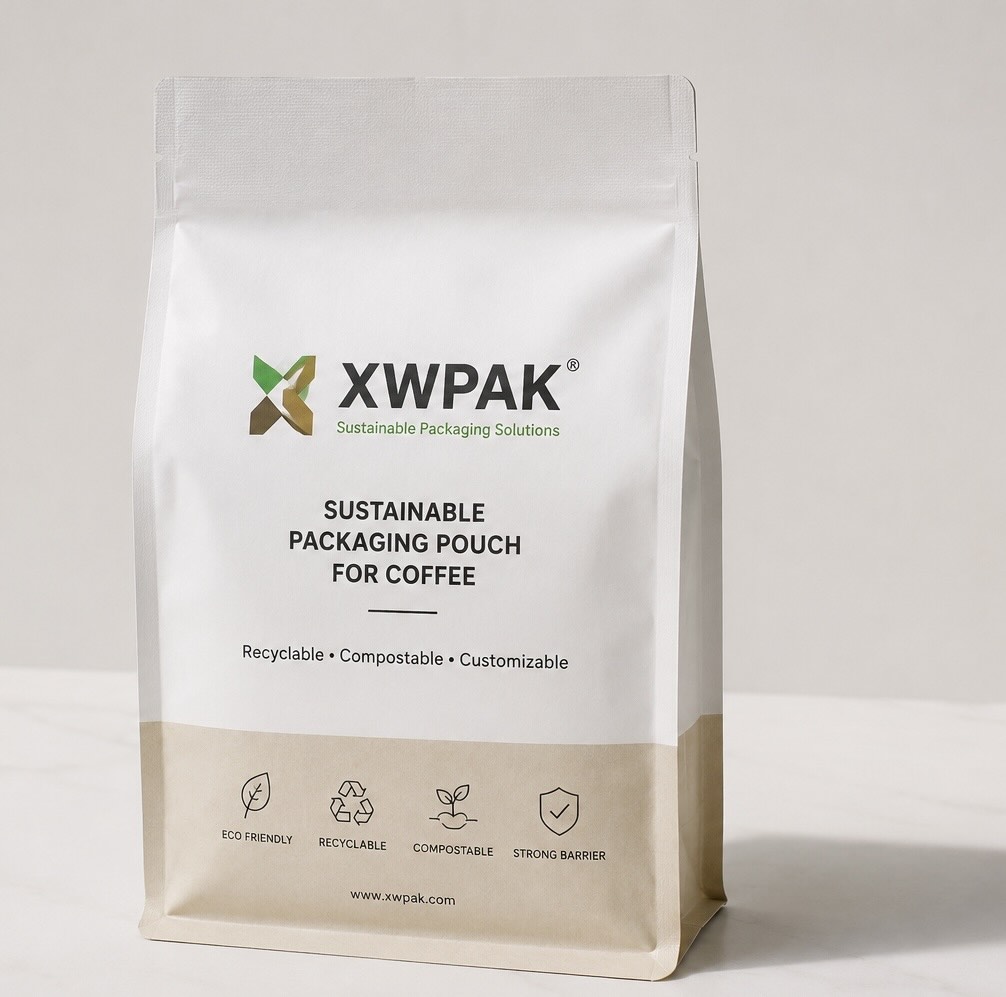
XWPAK is a packaging manufacturer founded in Shanghai, China in 2009, built on a foundation in flexible packaging. Over time, we grew into a wider packaging group, launching two specialized brands, BioPouches and Earthycores, so buyers could get deeper expertise in a specific packaging format rather than a generic catalog. This page answers the questions we get most often about what XWPAK manufactures, how our brands relate to one another, and which part of the XWPAK family to contact for a given project. Background on how the business started is covered in our XWPAK company history.
We get a version of the same question from most first-time buyers, usually phrased differently: is XWPAK the company I should be talking to, or is one of the other names I found actually the right contact for my specific product. It is a fair question, since a brand name alone does not tell a buyer whether they are looking at a flexible pouch specialist, a rigid paper packaging specialist, or the group that oversees both. The rest of this page works through that distinction in detail, starting with how the three brands relate to one another and moving through the specific formats, materials, and applications each one covers.
| Detail | Information |
|---|---|
| Founded | 2009 |
| Base | Shanghai, China |
| Business | Packaging manufacturer |
| Core expertise | Flexible packaging and custom packaging |
| Flexible packaging brand | BioPouches |
| Paper tube packaging brand | Earthycores |
| Major pouch formats | Stand-up, flat-bottom, gusseted, flat, spouted and rollstock |
| Material routes | Conventional, recyclable, compostable, PCR and paper-based options depending on application |
| Major applications | Coffee, pet food, food, snacks, supplements, herbal products, health and beauty |
| China operations | Manufacturing, production, quality control and R&D |
| Canada operations | R&D, office and customer support, and warehouse and stocking support |
XWPAK is the broader packaging business behind two specialized brands, BioPouches and Earthycores. We launched BioPouches in 2009 to focus specifically on custom flexible packaging and pouch solutions, including recyclable and compostable pouch options. We launched Earthycores in 2012 to focus on custom paper tube and paper canister packaging. This structure allows each brand to build deeper expertise around one packaging format while remaining part of the wider XWPAK packaging business. Neither brand is an unrelated company, and neither is a subsidiary of the other. Both sit alongside XWPAK as specialized parts of the same group. Put simply, XWPAK is the broader, parent packaging brand, BioPouches specializes in flexible packaging and custom pouches, and Earthycores specializes in custom paper tubes and paper canisters.
In practice, this means a buyer with a flexible pouch project gets the deepest support from BioPouches, a buyer with a paper tube or canister project gets the deepest support from Earthycores, and a buyer with a broader or mixed-format packaging question can start the conversation directly with XWPAK. We built the group this way because flexible pouch manufacturing and rigid paper tube manufacturing involve genuinely different equipment, tooling, and technical knowledge. A team that spends its time on gravure printing cylinders and pouch-forming lines is not the same team best positioned to advise on paper tube winding, edge finishing, or cap assembly, and separating the two into dedicated brands lets each one go deeper rather than spreading the same generalist knowledge across every format.
| Packaging Requirement | Recommended Brand | Why |
|---|---|---|
| Flexible stand-up pouch | BioPouches | Specialized flexible packaging |
| Flat-bottom coffee bag | BioPouches | Coffee and flexible pouch expertise |
| Pet food pouch | BioPouches | Flexible pet food packaging |
| Recyclable flexible pouch | BioPouches | Specialized recyclable pouch options |
| Custom paper tube | Earthycores | Specialized rigid paper tube manufacturing |
| Beauty paper tube | Earthycores | Dedicated beauty and personal care tube formats |
| Rigid coffee or tea canister | Earthycores | Paper tube and canister specialization |
| Broader custom packaging project | XWPAK | Group-level packaging manufacturing and project discussion |
XWPAK is a packaging manufacturer founded in Shanghai, China in 2009. We build our business around flexible packaging and a wider range of custom packaging structures, including paper-based and paper tube formats produced through our specialized brands.
Across the XWPAK group, we manufacture stand-up pouches, flat-bottom bags, gusseted pouches, zipper bags, flat bags, spout pouches, paper pouches and bags, retort packaging, rollstock and flexible film, recyclable packaging structures, compostable packaging structures, PCR packaging options, and paper-based packaging including custom paper tubes and canisters. Not every structure suits every product, and we work through that fit with each buyer directly rather than defaulting to whichever format is easiest to quote.
In practical terms, the flexible pouch and rollstock formats on this list are produced through BioPouches, while the paper tube and canister formats are produced through Earthycores. XWPAK is the entry point for a buyer who is not yet sure which format their product needs, or who has a project that spans both.
Yes. XWPAK is a packaging manufacturer, and BioPouches and Earthycores are the specialized brands through which we produce and deliver flexible pouches and paper tube packaging respectively. We are not a trading company or a distributor reselling packaging made elsewhere. Production, printing, and quality control for the formats on this page happen within the XWPAK group, based at our manufacturing operations in China.
XWPAK is based in Shanghai, China, where the company was founded in 2009 as a family packaging business. Manufacturing and production remain based in China, alongside quality control and part of our R&D work. We also maintain office, customer support, and warehouse and stocking capabilities in Canada, and R&D work is carried out in both China and Canada. Manufacturing itself is not carried out in Canada, where our presence supports customers rather than production.
XWPAK was founded in 2009 in Shanghai. BioPouches launched the same year as our specialized flexible packaging brand, and Earthycores followed in 2012 as our specialized paper tube brand.
Yes. Alongside our manufacturing base in China, we maintain an office in Canada that supports customer support, R&D, and warehouse and stocking functions. Manufacturing, production, and quality control stay concentrated in China, where the technical development work behind our packaging structures also takes place. R&D runs in both locations, which lets us pair on-the-ground manufacturing knowledge in China with customer-facing support and stocking closer to buyers served through our Canada office.
Yes. BioPouches is a specialized flexible packaging brand launched by XWPAK in 2009, and it remains part of the wider XWPAK packaging business.
BioPouches is XWPAK's specialized flexible packaging brand, covering a full range of flexible packaging formats, including stand-up pouches, flat-bottom bags, gusseted pouches, flat pouches and rollstock, with particular attention to recyclable, compostable, and other sustainability-oriented pouch structures. The name reflects that original focus on sustainability-conscious pouch materials, though the brand's product range today extends across conventional flexible packaging as well, not just the material types the name suggests.
Yes. Earthycores is a specialized paper tube and paper canister brand launched by XWPAK in 2012, and it operates as part of the wider XWPAK packaging business.
Earthycores is XWPAK's specialized brand for custom paper tube and paper canister packaging. It focuses on rigid, cylindrical paper structures rather than flexible pouches, serving categories such as coffee, tea, and health and beauty products. A paper tube is built by winding paper layers around a mandrel, adding a printed outer layer, and finishing the ends with caps or closures suited to the product, a process that has more in common with rigid packaging manufacturing than with flexible film production. Details on sizing, printing, and customization are covered in the Earthycores paper tube packaging FAQs.
XWPAK is the broader packaging manufacturer and group brand. BioPouches is the specialized flexible packaging and custom pouch brand within that group. Earthycores is the specialized custom paper tube and paper canister brand within that same group. All three are part of one packaging business, organized around different formats rather than around different companies.
Both brands are part of the wider XWPAK packaging business, but they specialize in different formats. BioPouches focuses on flexible packaging such as stand-up pouches, flat-bottom pouches, gusseted bags, flat pouches and rollstock. Earthycores focuses on rigid cylindrical paper packaging, including custom paper tubes and paper canisters. Neither format is a substitute for the other. The right choice depends on the product, the presentation a brand wants, and how the packaging needs to perform in production and on shelf.
BioPouches is the right starting point for a custom flexible pouch project. Its team works specifically on pouch structures, and technical detail on how specifications and printing come together is covered in the BioPouches article on stand-up pouch printing and customization.
Earthycores is the right starting point for a custom paper tube or canister project. Details on custom paper tube sizes and finishes give a fuller picture of what Earthycores can build around a specific product.
Yes, and this is one of the more practical reasons the group is organized by brand rather than as a single catalog. A coffee brand, for example, might use a flexible pouch for its everyday retail bag through BioPouches, while using a rigid paper format such as Earthycores' 50g coffee and tea paper canister for a gift set or a limited-edition release. The two formats are not interchangeable and are not meant to replace one another. A flexible pouch is generally the lower-cost, higher-volume option and handles moisture and oxygen barrier requirements well for everyday retail turnover. A rigid canister adds a tactile, premium unboxing experience that a flexible pouch cannot replicate, at a correspondingly different cost and production timeline. They solve different presentation and shelf needs for the same brand, and not every project requires both. A buyer working across formats can coordinate both projects through XWPAK directly, or work with BioPouches and Earthycores separately if the two projects are on different timelines.
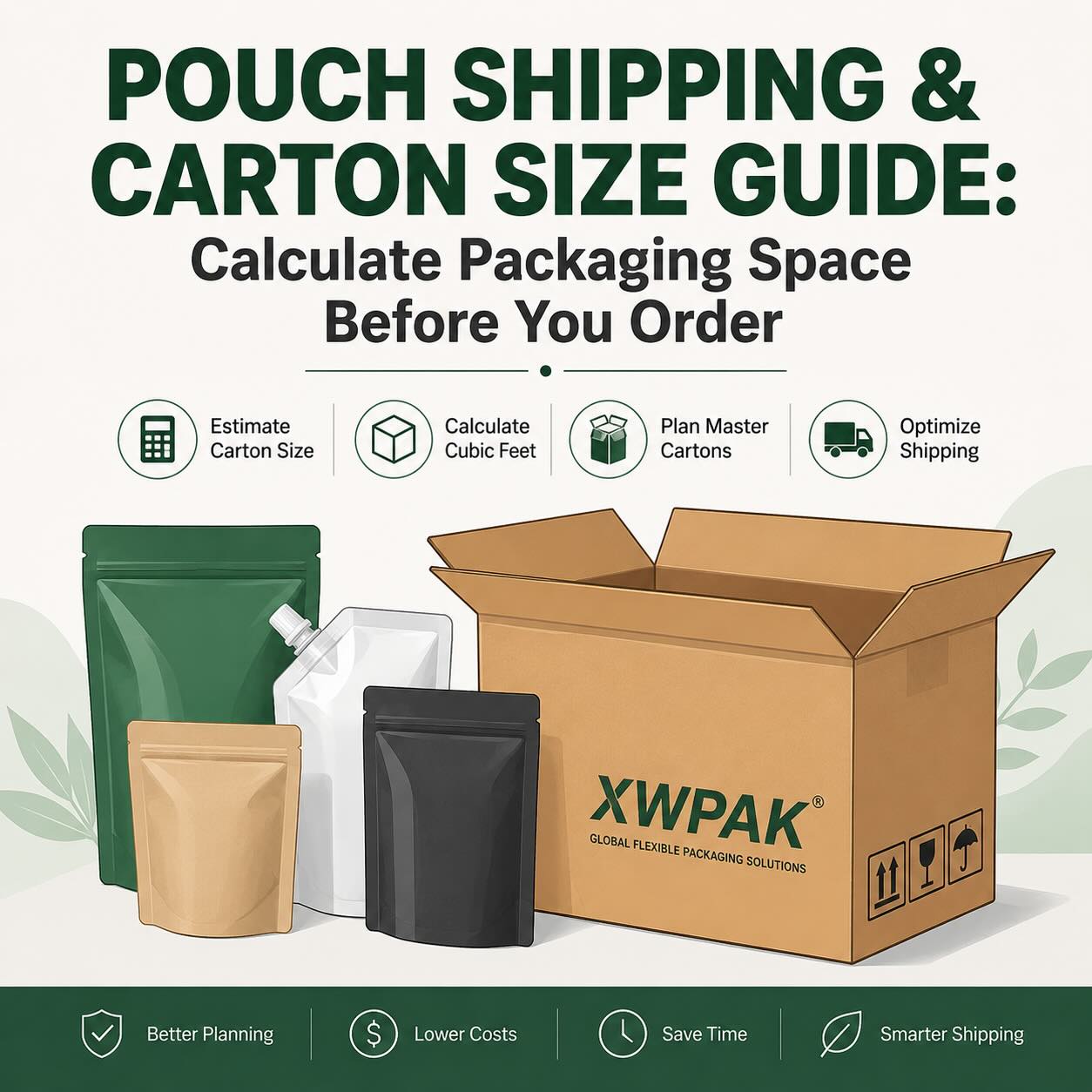
Through BioPouches, we manufacture stand-up pouches, flat-bottom bags, gusseted pouches, flat pouches, spouted pouches and rollstock for automated filling lines. Each format handles differently on a production line and on shelf, which is why format selection is worth discussing early in a project rather than choosing based on appearance alone.
Yes, through custom stand-up pouches produced by BioPouches. Stand-up pouches display upright on a shelf and work well for products where shelf presence matters as much as function, though the base needs to be sized and weighted correctly for the product's fill volume or the pouch will not hold its stance reliably once filled.
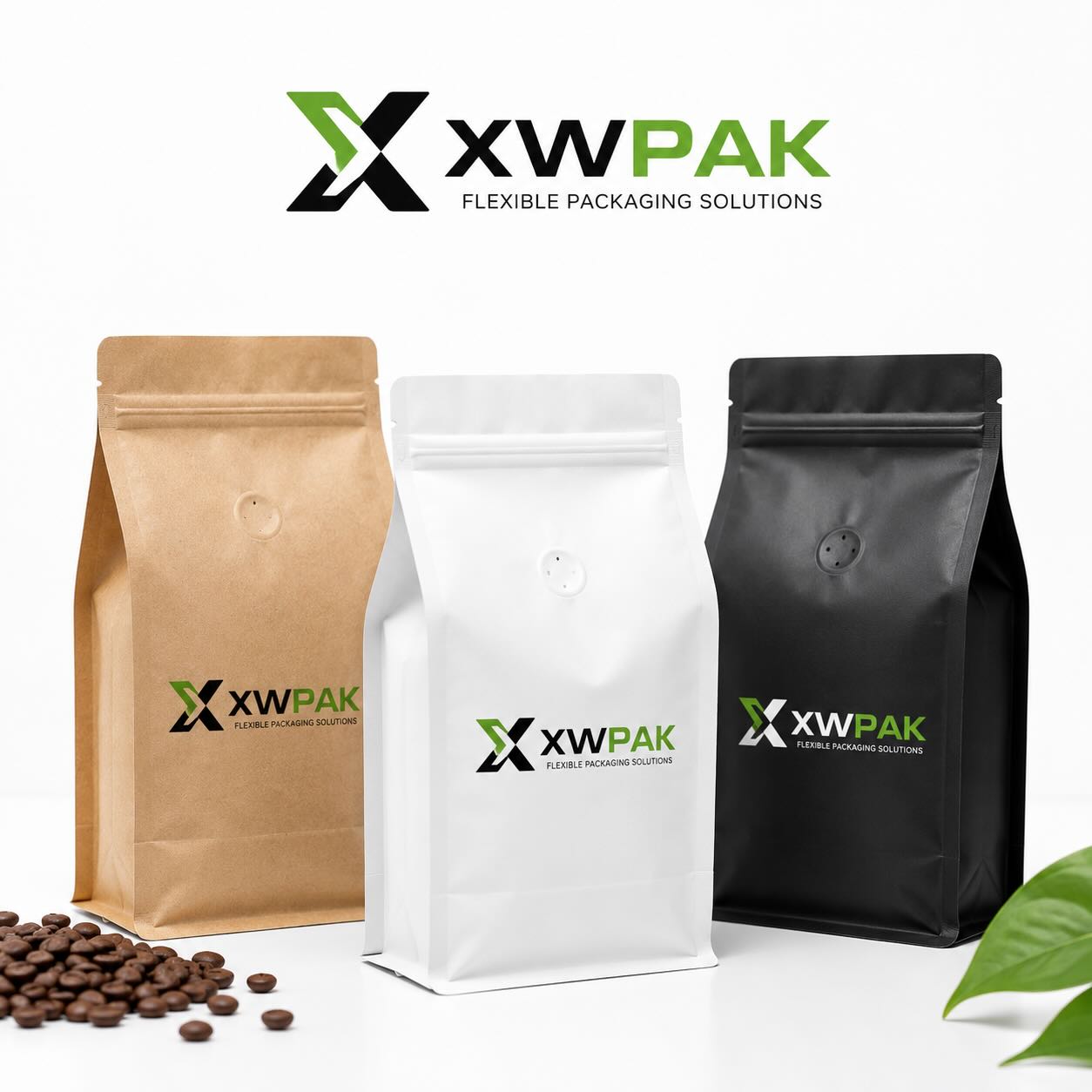
Yes, through custom flat bottom pouches produced by BioPouches. A brand might choose a flat-bottom pouch over a standard stand-up pouch when it needs a wider, more stable base, for example to mount a degassing valve securely for coffee, or to hold a larger fill volume without tipping during warehouse handling. The wider base also gives a printed design more usable surface area than a narrower stand-up pouch of the same fill volume.
Yes, through custom gusseted bags produced by BioPouches. Side-gusseted bags fold flatter than a stand-up pouch, which can suit products where shipping and storage efficiency matter more than shelf display, such as wholesale or subscription fulfillment orders that are not primarily sold off a retail shelf.
Yes. Spouted pouches are part of the BioPouches flexible packaging range, typically used for liquid or semi-liquid products that need a controlled pour or a resealable closure, such as sauces, baby food, or personal care liquids. Spout placement and size need to match the viscosity of the product, since a spout sized for a thin liquid will pour poorly with a thicker one.
Yes. Rollstock is film supplied in continuous rolls rather than pre-formed pouches, and it makes sense for buyers running automated form-fill-seal equipment at meaningful volume, where the film feeds directly into the machine that forms, fills, and seals each pack in one continuous line. It is less suited to smaller or highly variable production runs, where pre-formed pouches are typically the more practical choice, since rollstock's cost and speed advantages depend on consistent, high-volume throughput to offset the equipment and film specification work involved.
Yes, across two different paper-based routes. BioPouches produces flexible paper pouches and bags, typically with an internal liner for barrier performance. Earthycores produces rigid paper tubes and canisters, including plastic-free paper tube structures for buyers looking to reduce the plastic content of their packaging where the application allows it. A rigid paper tube can make more sense than a flexible pouch when a brand wants a premium, structured presentation, such as for a gift set or a limited-edition product, while a flexible pouch remains the more practical choice for everyday retail volume where flexibility, lower shipping weight, or resealable closures matter more. The production stages behind Earthycores' tubes, from material preparation through forming, printing inspection, and final quality checks, are documented in Earthycores' paper tube manufacturing process.
Printing quantity and printing method affect cost more than most buyers expect going in. Conventional printing methods, such as gravure or flexography, work well for stable, high-volume production because their setup cost, cylinders for gravure or plates for flexo, spreads across a large run. Once that tooling exists, per-unit printing cost at high volume is difficult for other methods to match. Shorter runs, frequent artwork changes, or a brand still testing a new SKU are usually better served by short-run digital pouch printing, which reduces the setup burden that makes small runs expensive under conventional methods. Neither approach is universally better. The right one depends on volume, the number of SKUs or design variants involved, and how often the artwork is likely to change. A brand launching five regional label variants of the same product, for example, is usually better served by digital printing for the first production cycle, then can reassess conventional printing once demand for each variant becomes predictable.
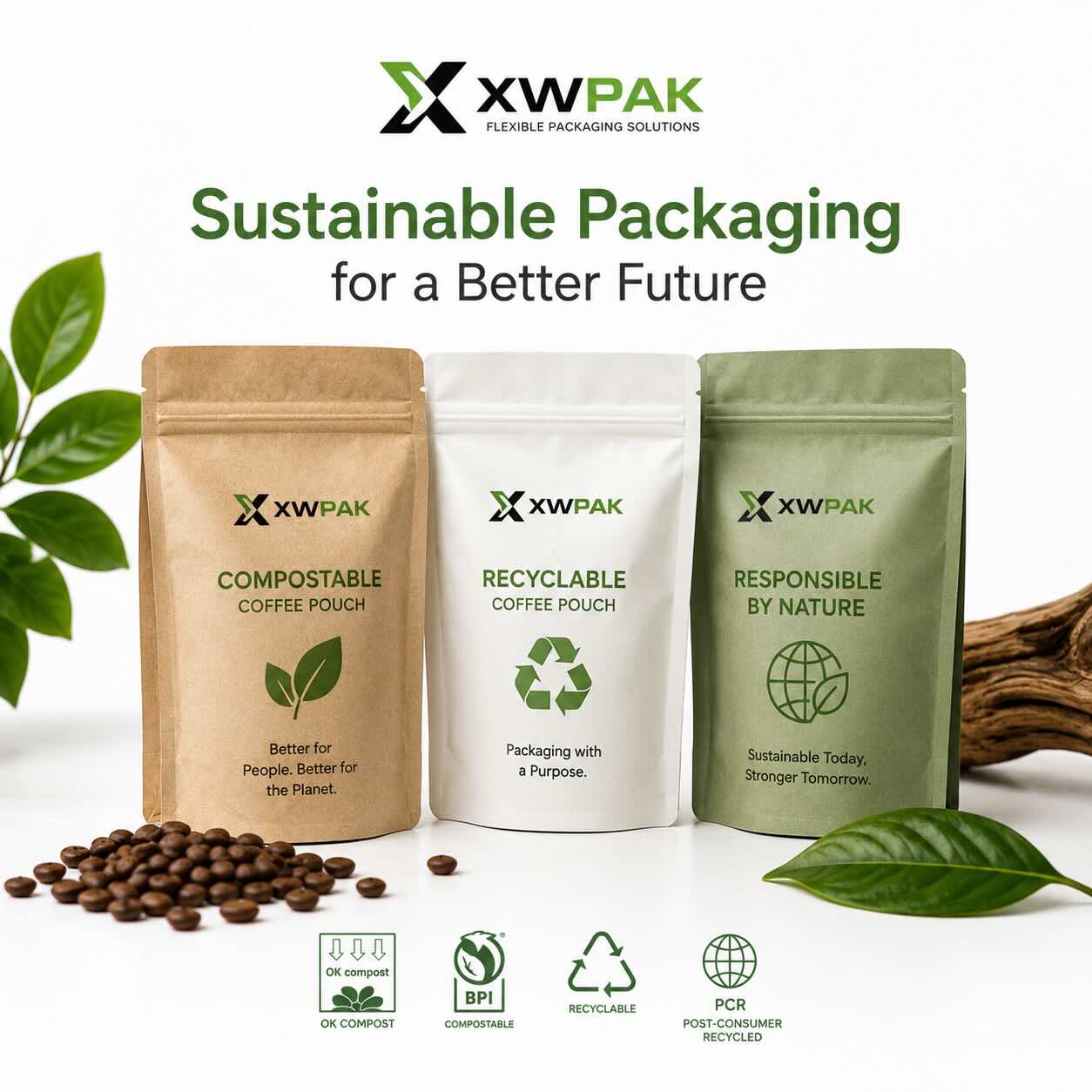
Recyclable, compostable, PCR, paper-based, full-paper, plastic-free, FSC-certified, and biodegradable are related terms, but they are not interchangeable, and we try to keep them distinct rather than treating any of them as a general stand-in for "sustainable." A recyclable structure is designed to move through standard recycling streams. A compostable structure is designed to break down under specific composting conditions, which vary between industrial and home composting standards, and is not the same claim as "biodegradable," a broader and less standardized term that does not guarantee a specific timeframe or environment. PCR content refers to recycled material blended into a new structure, which is a materials-sourcing distinction rather than an end-of-life claim. Paper-based and full-paper describe how much of a structure is paper rather than film, and FSC certification speaks to the sourcing of the paper fiber itself rather than to the finished package's recyclability or compostability. None of these terms guarantees the others, and a packaging choice built around one of them still needs to be evaluated against the barrier performance and shelf life a specific product requires.
Yes, through BioPouches' recyclable pouches, built as mono-material structures designed to move through standard recycling streams rather than being separated into layers a facility cannot process.
Yes, for specific product and material combinations through BioPouches. Certification scope matters here more than the word "compostable" alone. BioPouches holds specific certification documentation, detailed in its BPI and DIN CERTCO documentation, for defined products and materials. That documentation applies to the specific structures it covers, not automatically to every XWPAK or BioPouches product, so it is worth confirming certification scope directly for a given project rather than assuming it carries across the full catalog.
Yes. Post-consumer recycled content can be incorporated into certain flexible packaging structures, and availability depends on the film structure and barrier requirements a specific product needs. A structure carrying a meaningful percentage of PCR content is a different specification question from a compostable or fully recyclable structure, and buyers should be clear on which of these outcomes they actually need before requesting a quote, since a supplier building toward the wrong one will not solve the underlying requirement even if the material sounds similar on paper.
The product being packed should drive the packaging decision, not the other way around. Coffee needs a barrier strong enough to slow oxidation and, for freshly roasted beans, a one-way degassing valve to release built-up carbon dioxide without letting oxygen back in. Pet food often needs a tougher, more puncture-resistant film than a typical snack pouch, since kibble and treats can be abrasive against a thin film during shipping and handling. Health and beauty products frequently need protection from light and moisture rather than from oxygen alone, which points toward a different film structure again. Two products that look similar on a shelf can have genuinely different packaging requirements once their actual handling and storage conditions are accounted for. A more detailed look at matching a structure to a specific product is covered in BioPouches' food packaging selection guide.
Yes, primarily through BioPouches' custom coffee packaging, including flat-bottom and stand-up pouches with degassing valve options. For gift sets or premium presentation, Earthycores' rigid paper canisters are also available as a separate format, giving a coffee brand a choice between everyday retail packaging and a more structured presentation piece without switching manufacturers.
Yes, through BioPouches' custom pet food pouches. Barrier and puncture resistance both need particular attention here, since pet food products vary widely between dry kibble, wet food, and treats, each with different demands on the film. A film specified for a shelf-stable dry treat will often be the wrong choice for a wet or semi-moist product, where barrier and seal integrity matter more than puncture resistance alone.
Yes, through flexible pouch formats suited to powders, capsules, and loose herbal products, generally with moisture protection as a primary requirement, since powdered and capsule supplements are particularly sensitive to humidity affecting texture and shelf life. BioPouches' snack packaging range covers related dry-goods categories such as snacks and jerky, which share similar moisture and barrier considerations. Health and beauty brands working in rigid formats, such as lip balm or skincare tubes, are generally better served by Earthycores' health and beauty paper tubes, where the rigid structure supports a more premium unboxing experience than a flexible pouch typically offers for this category, and a broader view of where rigid paper tubes fit across industries is covered in Earthycores' paper tube packaging applications guide.
Yes, across all three brands. A custom project usually starts with a clear picture of the product and how the packaging needs to perform, rather than a request for a generic quote. The more specific that starting picture is, the more useful the resulting specification and quote will be.
A useful starting point covers the following details:
The product being packed
Fill weight or volume
Approximate pouch, bag, or tube dimensions
Expected order quantity
Material preference, including any recyclable, compostable, or PCR requirements
Printing requirements and number of designs or SKUs
Barrier requirements, such as oxygen or moisture sensitivity
Closure requirements, such as a zipper, valve, or spout
Destination market and any labeling or regulatory requirements
Timeline for the first production run
Any food-contact or other special certification requirements
A quote request built from this information produces a specification a manufacturer can actually stand behind, rather than a price per unit with no context attached. Two projects with the same fill weight can need entirely different packaging once destination market labeling rules, closure type, and reorder frequency are factored in, and none of those differences show up if the only question asked is "what does a pouch cost."
Food-contact requirements are worth confirming directly and early, since they affect which materials and inks are usable and can shape the entire structure choice. Getting this wrong is not a minor fix later, since it can mean requalifying the film or the ink system rather than adjusting a print detail. It is also worth testing a proposed material or structure with the actual product before committing to a full production run, since barrier performance, seal behavior, and shelf life can all vary once real product, rather than a generic sample, is inside the pack. A film that performs well in a lab test with a placeholder filling can behave differently once it is holding an oily, acidic, or abrasive product over weeks of actual storage.
For specialized flexible pouch projects, BioPouches provides deeper pouch-specific resources and technical support. For custom paper tube or canister projects, Earthycores provides deeper paper-tube-specific resources. For broader or mixed-format packaging requirements, XWPAK is the group-level starting point for the conversation, and can help direct a project to the right brand once the basic product and format questions are answered.